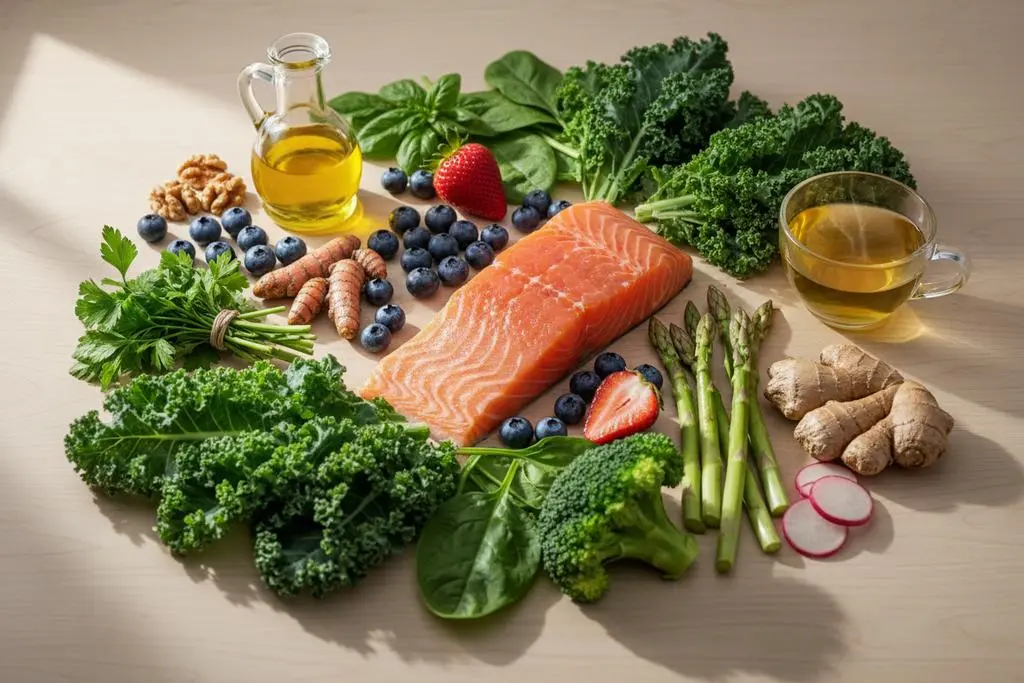
Can food help sciatica? It's one of the most common questions we hear from patients in Vacaville and across Solano County.
The honest answer is that diet is a supporting factor, not a cure. This guide covers which foods may help, which may work against you, and when nutrition alone isn't enough.
Table of Contents
What Is Sciatica?
Sciatica is a set of symptoms rather than a diagnosis on its own. It develops when something presses on or irritates the sciatic nerve, most often in the lower spine.
Our sciatica page covers causes, symptoms, and treatment options in more detail.
Can Diet Help Sciatica?
Chronic inflammation can make an irritated nerve feel worse. Diets rich in whole foods and low in processed ingredients are associated with lower inflammatory markers throughout the body.[1]
Good nutrition also supports tissue repair and helps with weight management, which can reduce mechanical stress on the lower back. None of this changes the underlying structural cause of sciatica, which is why persistent symptoms still deserve a professional evaluation.
Best Foods for Sciatica
Omega-3 Rich Fish
Salmon, sardines, and mackerel are rich in omega-3 fatty acids. These fats are widely studied for their anti-inflammatory effects.[2] Including fatty fish a few times a week is a simple way to work more omega-3s into your diet.
Leafy Greens
Spinach, kale, and Swiss chard are packed with magnesium and antioxidants. These leafy greens also provide vitamins that support nerve and muscle function. These greens are easy to add to salads, smoothies, or side dishes.
Berries
Blueberries, strawberries, and other berries are high in antioxidants and vitamin C. Both nutrients help the body manage oxidative stress, which plays a role in inflammation.[3]
Nuts and Seeds
Walnuts, flaxseed, and chia seeds provide healthy fats along with minerals like magnesium. They make an easy, portable snack that supports the same anti-inflammatory goals as fatty fish.
Turmeric and Ginger
Turmeric and ginger are well known for their anti-inflammatory properties. These spices should not be expected to provide pain relief on their own. They are still an easy, low-risk addition to meals or smoothies.
Whole Grains
Oats, quinoa, and brown rice provide fiber that supports balanced blood sugar and overall nutrition. A steady blood sugar level helps avoid the inflammatory spikes linked to refined carbohydrates.
Olive Oil
Extra virgin olive oil is a good replacement for highly processed cooking oils. It contains healthy monounsaturated fats and plant compounds associated with reduced inflammation.[4]
Colorful Vegetables
Broccoli, peppers, and carrots each bring a different mix of vitamins and antioxidants to the table. Brussels sprouts add even more variety. Eating a variety of colors is a simple way to cover a broader nutritional base.
Hydration
Staying well hydrated supports overall tissue health, including the discs in your spine. Water is the simplest, most overlooked piece of an anti-inflammatory routine.
Foods That May Increase Inflammation
No single food causes sciatica or makes it worse on its own. A dietary pattern heavy in the items below is associated with higher systemic inflammation over time.[5] That added inflammation can make nerve irritation, including neuropathy, feel more pronounced.
- Sugary beverages, including soda and sweetened coffee drinks
- Fried foods
- Highly processed snacks and packaged foods
- Refined carbohydrates, such as white bread and pastries
- Excessive alcohol
Foods That Support Nerve Health vs. Foods to Limit
| Foods That May Support Nerve Health | Foods to Limit |
|---|---|
| Salmon, sardines, mackerel (omega-3 rich) | Fried foods (french fries, fried chicken) |
| Spinach, kale, Swiss chard (leafy greens) | Sugary beverages (soda, sweetened coffee) |
| Extra virgin olive oil | Refined carbohydrates (white bread, pastries) |
| Walnuts, flaxseed, chia seeds | Highly processed snacks (chips, crackers) |
| Blueberries, strawberries, raspberries | Excessive alcohol |
| Broccoli, peppers, carrots | Processed meats (sausage, deli meats) |
Based on research linking dietary patterns to inflammatory markers.[1][5]
Sample One-Day Anti-Inflammatory Meal Plan
This sample plan is meant to illustrate the ideas above in a realistic, everyday format.
| Meal | Example |
|---|---|
| Breakfast | Oatmeal topped with walnuts and mixed berries |
| Lunch | Grilled salmon over spinach and mixed greens with olive oil dressing |
| Dinner | Roasted broccoli, peppers, and carrots with quinoa |
| Snacks | A handful of almonds, or plain yogurt with chia seeds |
Lifestyle Habits That Work Alongside Nutrition
Nutrition rarely works in isolation. Regular movement and enough sleep both play a role in how the body manages inflammation and recovers from strain.
- Walking or other light physical activity
- Gentle stretching
- Adequate, quality sleep
- Maintaining a healthy weight
- Staying hydrated throughout the day
When Diet Alone Isn't Enough
Diet alone is not enough when certain warning signs appear. These signs point to a structural cause that nutrition cannot resolve.
- Severe or worsening pain
- Weakness in the leg or foot
- Numbness or tingling
- Symptoms lasting more than a few weeks
At Absolute Integrative Physical Medicine, care for sciatica symptoms may include spinal decompression to relieve nerve pressure, chiropractic care to address spinal misalignment or regenerative therapy for additional support in tissue healing. Patients wondering whether it's time for professional care can get evaluated for sciatica to identify the underlying cause.
Struggling with sciatica symptoms that won't resolve?
Our team can help identify the root cause and build a comprehensive care plan.
Schedule a Consultation →Frequently Asked Questions
References
Authoritative Sources
1. American Academy of Orthopaedic Surgeons. (2023). Sciatica: What You Need to Know. https://orthoinfo.aaos.org/en/diseases--conditions/sciatica/
2. National Institutes of Health. (2022). Omega-3 Fatty Acids: Fact Sheet for Health Professionals. https://ods.od.nih.gov/factsheets/Omega3FattyAcids-HealthProfessional/
3. Basu, A., et al. (2019). "Dietary berries and anti-inflammatory markers." Journal of Nutritional Biochemistry, 68, 1-10. https://doi.org/10.1016/j.jnutbio.2019.03.010
4. Estruch, R., et al. (2018). "Primary Prevention of Cardiovascular Disease with a Mediterranean Diet." New England Journal of Medicine, 378, e34. https://www.nejm.org/doi/full/10.1056/NEJMoa1800389
5. Harvard T.H. Chan School of Public Health. (2023). Dietary Inflammatory Index. https://www.hsph.harvard.edu/nutritionsource/anti-inflammatory-diet/
Final Thoughts
Food is a meaningful piece of managing sciatica, but it is only one piece. An anti-inflammatory eating pattern may support nerve health and reduce systemic inflammation, while the structural causes of sciatica still need proper evaluation and care.
If your symptoms are persistent, worsening or affecting your daily life, it's time for a professional evaluation. Our team can help you get evaluated for sciatica and build a plan around the actual cause. We serve patients throughout Vacaville, Fairfield, Dixon and the greater Solano County area.
This content was reviewed by Absolute Integrative Physical Medicine professionals. It is not a substitute for medical evaluation.