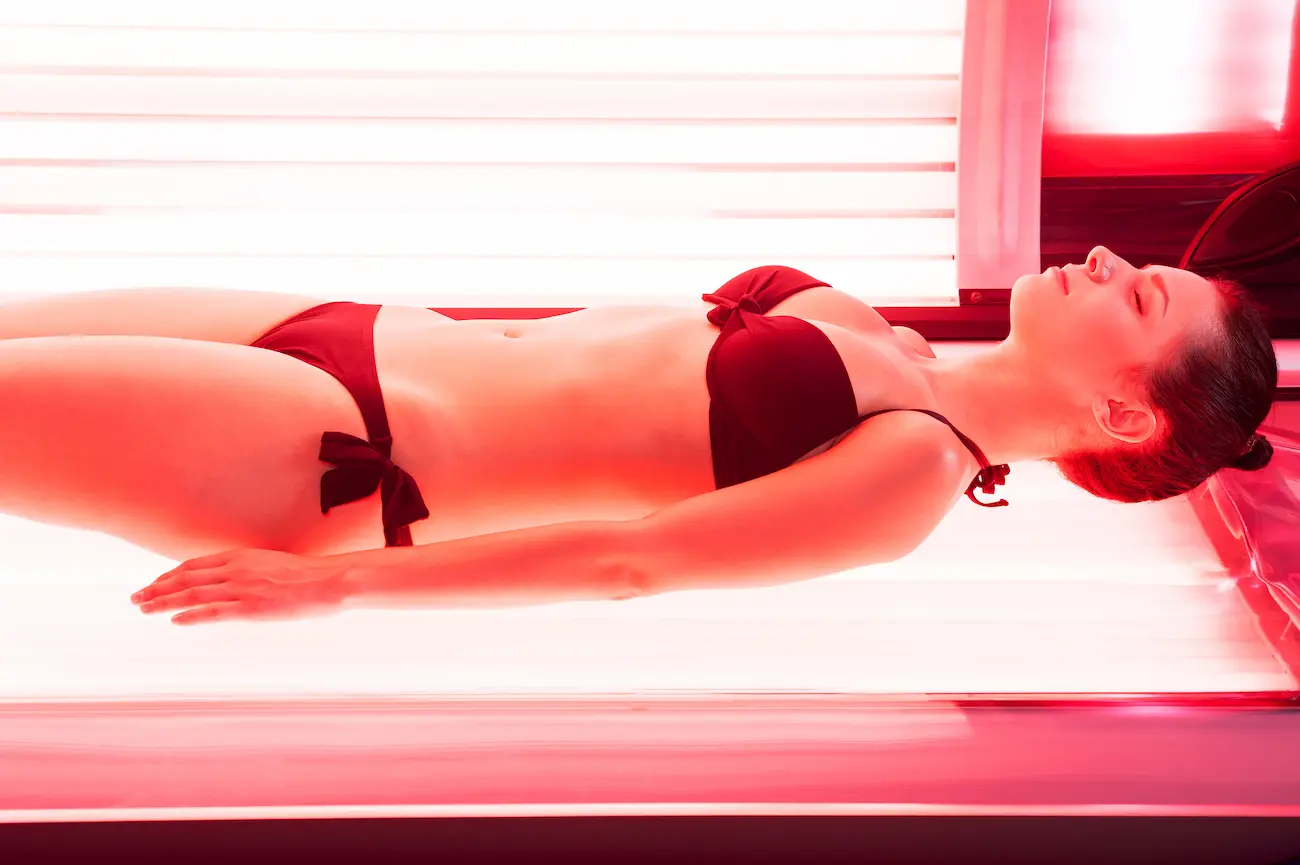
Red light therapy (photobiomodulation) uses specific wavelengths of light to stimulate cellular energy production. It is a cumulative, non-invasive treatment used for pain, inflammation, and tissue repair. Results are dose-dependent and typically build over multiple sessions.
Timelines vary depending on what you are treating. Many people notice the first small changes after several consistent sessions rather than after one. Recovery and soreness benefits tend to appear soonest. Pain relief builds over a few weeks. Skin and deeper tissue changes usually take the longest.
How Long Does Red Light Therapy Take to Work?
From there the paths diverge. Pain relief tends to build gradually across several weeks of regular treatment. Recovery and post-activity soreness benefits often register first. Skin and deeper tissue changes, as well as body contouring and support for weight loss (combined with a healthy lifestyle) usually take the longest because the underlying remodeling is a slower biological process.
Photobiomodulation research reflects this pattern. Most published trials deliver two to three sessions per week across periods ranging from a few days to twelve weeks. Repeated and cumulative protocols are the ones most often associated with sustained relief. The sections below break each goal out separately. For how the therapy itself works, see our full-body red light therapy service page.
How Many Sessions Before Pain Improves?
Skin goals and athletic recovery goals move on their own separate schedules. Clinical trials studying photobiomodulation and pain scores commonly run twelve-session courses with measurements at the midpoint and at completion. That design exists because pain response is assessed across a course rather than after a single visit.
What Counts as Progress Before the Pain Is Fully Gone?
Progress often shows up as an improved function before it shows up as lower pain. These early markers are the ones worth watching:
- Improved mobility in the affected joint or muscle
- Less morning stiffness when you first get out of bed
- Quicker recovery after activity or exercise
- Fewer flare-ups across a typical week
- Better tolerance for standing, walking or daily tasks
Any of these can appear while your pain rating still reads about the same. That is a normal stage of the process rather than a sign that treatment has stalled. Tracking these markers also gives you something concrete to bring to your next provider visit.
Why Does the Timeline Vary So Much From Person to Person?
Red light therapy timelines vary because of specific factors in your body and in your treatment plan, as this therapy works on a deeper cellular level and genetics and lifestyle represents a huge factor. The eight below account for most of the difference between patients.
Does the Type or Severity of Your Condition Affect the Timeline?
Yes. Acute problems such as a recent muscle strain typically respond faster than long-standing conditions. Severity matters as much as type. A mild inflammatory flare involves less tissue than years of accumulated joint wear, so the same protocol produces visible change at different speeds.
Does Your Underlying Diagnosis Change How Long It Takes?
Yes. Two people with knee pain may have very different diagnoses underneath it. Cartilage degeneration, nerve involvement and post-surgical healing each follow separate biological timelines. A provider diagnosis is what makes an expected timeline meaningful rather than generic.
Does Session Frequency Affect How Fast You See Results?
Yes. Consistent frequency is one of the strongest predictors of how quickly change appears. Published photobiomodulation protocols commonly use two to three sessions per week because cumulative exposure drives the response. Spacing sessions too far apart tends to stretch the timeline considerably.
Do Your Treatment Goals Change the Expected Timeline?
Yes. Recovery goals such as reduced post-workout soreness often register within the first week or two. Pain reduction goals usually take several weeks of consistent sessions. Skin and tissue quality goals take the longest because collagen remodeling is slow. Naming your primary goal sets a realistic expectation from the start.
Does Combining Red Light Therapy With Other Treatments Change the Timeline?
It can. Red light therapy is frequently used alongside chiropractic care, spinal decompression or corrective exercise. Photobiomodulation research generally supports its use as a complementary therapy rather than a standalone treatment. A combined plan can address the mechanical driver while the light therapy supports the tissue response.
Do Lifestyle Habits Affect How Quickly You See Results?
Yes. Sleep quality, activity level and nutrition all influence how well tissue repairs between sessions. Smoking and unmanaged blood sugar can slow healing meaningfully. Red light therapy works with your body repair systems rather than replacing them, so the condition of those systems matters.
Does Following Your Provider's Recommended Plan Affect Your Results?
Yes. Skipped sessions and self-adjusted schedules are among the most common reasons a timeline stretches out. Protocols are built around cumulative exposure delivered at a set frequency. Completing the plan as prescribed also gives your provider clean information to evaluate at the reassessment point.
Do Age or Circulation Affect How Fast Red Light Therapy Works?
They can. Tissue repair generally slows with age, and reduced circulation limits how well nutrients reach a treated area. Patients with diabetes or peripheral vascular conditions may need a longer course. This does not mean the therapy will not help, only that the expected pace may differ.
Who Tends to Notice Changes Sooner?
Patients across Solano County arrive with very different presentations, and those differences shape how quickly change appears. The general pattern looks like this.
| People Who May Notice Changes Sooner | People Who May Need More Time |
|---|---|
| Acute muscle soreness | Long-standing chronic pain |
| Minor inflammation | Complex or multiple conditions |
| Athletic recovery | Persistent joint degeneration |
*This table reflects general patterns reported in photobiomodulation research and clinical practice. It is not a guarantee of individual results. Only an in-person evaluation by your provider can produce a personalized timeline estimate.*
What Does a Typical Red Light Therapy Timeline Look Like by Condition?
The table below maps typical patterns for the goals patients most often bring to our Vacaville office.
| Condition Category | Typical Sessions to Notice Change | Typical Timeframe | First Noticeable Change | Typical Next Improvement |
|---|---|---|---|---|
| Acute muscle soreness or minor strain | 1 to 3 | Within the first week | Less soreness after activity | Faster return to normal movement |
| Chronic joint pain | 6 to 12 | 3 to 6 weeks | Reduced stiffness | Improved movement and reduced pain |
| General inflammation | 4 to 8 | 2 to 4 weeks | Less swelling or heat in the area | Easier daily movement |
| Nerve-related pain | 8 to 12 or more | 4 to 8 weeks | Fewer sensation spikes | Steadier day-to-day symptoms |
| Post-exercise or athletic recovery | 1 to 4 | 1 to 2 weeks | Quicker recovery between workouts | Better training tolerance |
| Skin or surface-level recovery | 8 to 12 | 4 to 8 weeks | Improved skin texture | Gradual tone and firmness change |
| Chronic long-standing pain | 10 to 15 or more | 6 to 12 weeks | Shorter or milder flare-ups | Longer stretches of lower pain |
*These are estimated patterns drawn from published photobiomodulation protocols and general clinical experience. They are not guaranteed. Your actual timeline depends on your diagnosis, your session frequency and your provider treatment plan.*
If Cellular Changes Start Immediately, Why Don't You Feel Better Right Away?
Cellular activity begins during your first session, but the perception of relief lags well behind it. Light absorbed at the mitochondrial level influences cellular energy production almost immediately. That single dose is far too small to change how a painful area feels. Repeated exposure is what accumulates into measurable tissue change. The gap between the biological start and the felt result is the normal shape of this therapy.
Can One Red Light Therapy Session Help?
One session can produce a temporary sense of warmth, relaxation or mild soreness relief. It is unlikely to resolve an underlying pain condition on its own or give long-term results. Photobiomodulation protocols are designed as courses of treatment because the therapeutic effect is cumulative. Judge the therapy by a full course rather than by a first visit.
What If Nothing Changes After Several Sessions?
No change after a handful of sessions is common and not automatically a sign that the therapy is failing. Several sessions are often still inside the normal window before change appears. The useful step is to track specific function markers rather than a single overall pain rating. The stage guide in the next section shows when a lack of change becomes worth acting on.
How Should You Evaluate Your Progress at Each Stage of Treatment?
Use the stage of your treatment course to decide whether to continue, track or reassess.
- After 1 to 2 sessions: Too early to judge. Continue as planned.
- After 4 to 6 sessions: Begin tracking symptom trends such as stiffness and flare-up frequency.
- After 8 to 10 sessions: Reassess with your provider if there has been little or no change.
- After 12 or more sessions: Discuss modifying the plan or exploring other options.
Why Isn't Red Light Therapy Working for Me?
Three explanations account for most cases. The first is timing, since you may still be inside the normal window before change appears. The second is frequency, because inconsistent sessions dilute the cumulative exposure a protocol depends on. The third is fit, meaning the underlying driver of your pain may need a different or additional treatment. Bring your session count and your tracked symptom notes to your provider so the plan can be evaluated properly.
Common Misconceptions About Red Light Therapy Timelines
Four beliefs regularly distort how patients judge their own progress.
Are More Sessions in One Week Always Better?
No. More frequent sessions than your provider prescribed are not necessarily faster or more effective. Photobiomodulation follows a biphasic dose response, meaning too little light and too much light can both produce a weaker result than the correct dose. Follow the schedule you were given.
Does No Immediate Relief Mean Treatment Isn't Working?
No. Cellular activity begins during the first red light therapy session, but the change produced by one exposure is too small to feel. Relief becomes perceptible only after repeated sessions accumulate into measurable tissue change. Absence of immediate relief is expected rather than diagnostic.
Does Feeling Warmth During a Session Mean It's Working?
No. Warmth is a sensory response to light and heat at the skin surface. It is not a reliable indicator of therapeutic effect. Some patients feel noticeable warmth and progress slowly, while others feel almost nothing and progress steadily. Judge results by symptoms and function instead.
Does Needing Multiple Sessions Mean the Therapy Has Failed?
No. Multi-session courses are the standard design of photobiomodulation protocols rather than a fallback after failure. Published trials commonly run twelve sessions before measuring the primary outcome. Needing a full course is the therapy working as intended.
How Does Red Light Therapy's Timeline Compare to Other Non-Surgical Treatments?
Different non-surgical treatments produce relief on different schedules. Comparing them side by side makes the cumulative pattern of cold laser therapy and red light therapy easier to understand.
| Therapy | Typical Improvement Pattern |
|---|---|
| Red Light Therapy | Gradual and cumulative |
| Cold Laser Therapy | Gradual and cumulative |
| Manual or Chiropractic Therapy | Can provide immediate but temporary relief if inconsistent |
| Exercise Therapy | Often slower but longer-term |
How Is Red Light Therapy's Timeline Different From Cold Laser Therapy?
The two follow closely related timelines because both are forms of photobiomodulation. Cold laser therapy uses a focused beam on a targeted area, while full-body red light therapy delivers light across a much larger surface. Both are cumulative and course-based rather than single-session treatments. Our breakdown of the science behind cold laser therapy explains the shared mechanism in more detail.
What Can You Personally Do to Affect How Fast You See Results?
Five things sit within your control. Attend sessions at the frequency your provider sets. Follow the activity guidance you were given between visits. Support recovery with adequate sleep and reasonable nutrition. Track specific symptom markers rather than relying on memory at your reassessment. Tell your provider promptly about new or unexpected symptoms, since that information often prompts a useful adjustment.
How Does Red Light Therapy Fit Into a Broader Pain Management Plan?
Red light therapy usually works best as one component of a wider plan rather than a standalone treatment. Photobiomodulation research supports it as a complementary therapy alongside other conservative care. At Absolute Integrative Physical Medicine our non-surgical pain management plans may combine it with chiropractic care, corrective exercise and other therapies based on your evaluation. Patients reach our Vacaville clinic from Fairfield and Dixon by way of I-80.
Quick Answers for Red Light Therapy
Does Red Light Therapy Work Immediately?
Not in terms of felt relief. Cellular activity starts during the first session, but noticeable symptom change typically requires several consistent sessions before it registers.
How Long Before Inflammation Decreases?
Inflammation-related changes often begin to register within roughly two to four weeks of consistent sessions. Photobiomodulation research measures inflammatory and pain outcomes across a full treatment course rather than after single exposures.
How Often Should You Go?
Published protocols commonly use two to three sessions per week. This is general guidance only. Your actual frequency is set by your provider based on your evaluation, diagnosis and treatment goals.
Is It Normal to Feel Nothing After One Session?
Yes. Feeling nothing after a first session is a common experience and not a sign of failure. The therapeutic effect of photobiomodulation is cumulative by design.
Ready to see if red light therapy works for your condition?
Book an evaluation and get a timeline based on your specific diagnosis and goals.
Learn More About Our Red Light Therapy →Frequently Asked Questions
What Is the Next Step if You Want a Timeline Built on Your Condition?
Book an evaluation. Red light therapy timelines are not one number, but they become predictable enough to plan around once your diagnosis and goals are clear. A provider can tell you which condition category you fall into and what a reasonable checkpoint looks like for you.
If you are weighing red light therapy in Vacaville, our team can give you a timeline built on your situation rather than an average. Call (707) 474-5688 to request a consultation. We serve patients from Vacaville, Fairfield and Dixon and throughout Solano County.
Schedule Your Consultation →References
Mayo Clinic: Red light therapy: What it is, benefits, and more
National Institutes of Health (NIH): Photobiomodulation research on PubMed
Journal of Pain Research: Photobiomodulation for chronic pain: systematic review and meta-analysis
This content has been reviewed by our healthcare professionals for accuracy and educational purposes. It should not be used as a substitute for professional medical advice, diagnosis, or treatment.