Reviewed by: Dr. Alex Tam, DC
Shockwave therapy is commonly considered for certain chronic musculoskeletal conditions, particularly persistent tendon and fascia disorders. Examples include plantar fasciitis, tennis elbow, golfer's elbow, calcific shoulder tendinopathy, and selected Achilles, patellar, and hip tendon conditions. However, the evidence differs considerably between diagnoses. Some applications have stronger clinical support, while others remain uncertain or have conflicting research. The appropriate treatment also depends on the affected tissue, the type of shockwave technology used, and an accurate clinical diagnosis.
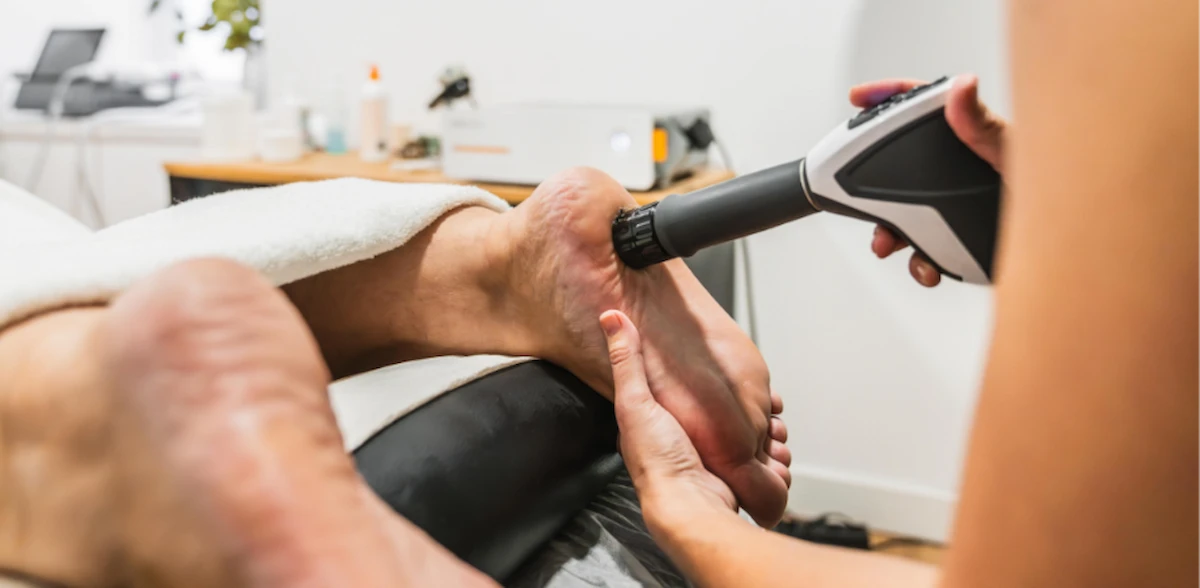
Extracorporeal shockwave therapy (ESWT) uses acoustic pressure waves delivered to a targeted area. The term shockwave therapy is often used broadly to describe both focused shockwaves and radial pressure wave therapy, although these technologies are not identical.
Understanding which shockwave therapy conditions may respond to treatment starts with identifying the affected tissue. This guide examines tendon disorders, fascia conditions, and selected musculoskeletal problems while explaining what current research says about their treatment.
What Types of Conditions Can Shockwave Therapy Help Treat?
Shockwave therapy is primarily considered for selected chronic tendon and fascia conditions. Certain bone-related and other musculoskeletal applications may also be considered under specialized protocols.
The main categories include:
- Tendinopathies: Disorders affecting tendons, the connective tissues that attach muscles to bones. Examples include tennis elbow, Achilles tendinopathy, and patellar tendinopathy.
- Fasciopathies: Conditions affecting fascia, the connective tissue surrounding or supporting structures in the body. Persistent plantar fasciitis is a common example.
- Other musculoskeletal conditions: Selected muscle, soft-tissue, and bone-related problems where clinical evidence or professional recommendations support consideration.
A 2025 international modified Delphi study involved 41 clinical and research experts from 13 countries. The panel reached consensus on 69 of 118 statements concerning treatment terminology, indications, treatment parameters, and safety considerations.
The researchers also emphasized that focused shockwaves and radial pressure waves should be distinguished when discussing treatment and research findings. Expert consensus provides clinical guidance, but it does not establish that every recommended application is effective for every patient.
Which Conditions May Be Considered for Shockwave Therapy?
| Condition | Primary tissue involved | Why it may be considered | Evidence considerations |
|---|---|---|---|
| Plantar fasciitis | Plantar fascia | Persistent fascia-related heel pain | Relatively established application; individual trial results vary |
| Tennis elbow | Common extensor tendon | Chronic tendon-related outer elbow pain | Mixed evidence |
| Golfer's elbow | Common flexor tendon | Medial elbow tendinopathy | Limited condition-specific evidence |
| Calcific shoulder tendinopathy | Rotator cuff tendon | Calcium deposits within tendon tissue | Established specialized application |
| Achilles tendinopathy | Achilles tendon | Chronic tendon symptoms | Uncertain evidence; not recommended as routine treatment by a 2026 systematic review |
| Patellar tendinopathy | Patellar tendon | Chronic tendon-related knee symptoms | Mixed evidence |
| Gluteal tendinopathy | Gluteal tendons | Persistent lateral hip tendon symptoms | Condition-specific evidence |
| Myofascial pain | Muscle and surrounding fascia | Selected localized soft-tissue presentations | Evidence and protocols vary |
What Is the Difference Between Tendon and Fascia Conditions?
Tendons attach muscles to bones and transmit the force produced during muscle contraction. Fascia is a broader layer of connective tissue that surrounds, supports, and separates structures throughout the body.
The plantar fascia is a thick band of connective tissue that runs along the sole of the foot, extending from the heel toward the toes. It helps support the foot's arch during standing and walking.
Plantar fasciitis is therefore a fascia-related condition rather than a tendon disorder. Although tendon and fascia conditions can both develop persistent degenerative changes, they involve different anatomical structures.
For additional background, read our guide to understanding tendinopathy.
Are All Chronic Pain Conditions Suitable for Shockwave Therapy?
No. Having chronic pain does not automatically make someone a candidate for shockwave therapy. Treatment suitability depends on identifying a specific condition and an appropriate tissue target.
Widespread pain, nerve-related symptoms, joint disorders, and pain without a clearly identified musculoskeletal source may require a different approach. A clinical assessment helps determine whether the affected tissue and diagnosis are appropriate for this treatment.
Can Shockwave Therapy Help Plantar Fasciitis and Chronic Heel Pain?
Shockwave therapy may be considered for persistent plantar fasciitis, particularly when initial conservative treatment has not provided sufficient improvement. Plantar fasciitis affects the plantar fascia near its attachment to the heel bone and commonly causes pain during the first steps in the morning or after periods of rest.
A 2024 Singapore consensus guideline recommended considering ESWT as an adjunct for plantar fasciitis lasting more than six weeks, particularly after standard conservative treatment has been attempted.
A 2024 systematic review and meta-analysis of 11 randomized controlled trials found that both focused and radial shockwave treatments reduced pain in patients with plantar fasciopathy. The pooled results showed reductions of approximately 2.8 to 3.0 points on visual analogue pain scales, although treatment settings and study protocols varied.
However, not all studies demonstrate additional benefits. A separate 2024 randomized controlled trial involving 200 patients found no significant additional improvement in heel pain from radial shockwave therapy compared with advice and customized foot orthoses at six months.
These findings suggest that shockwave therapy may be a useful adjunct for selected patients, but it should not replace appropriate conservative management.
Not every case of heel pain is caused by plantar fasciitis. Other possible causes include heel fat pad irritation, nerve entrapment, stress fractures, and Achilles tendon disorders.
Learn more about the common causes of morning heel pain and how calf tightness can contribute to heel pain.
Can Shockwave Therapy Treat Tennis Elbow and Golfer's Elbow?
Shockwave therapy may be considered for selected cases of chronic tennis elbow and golfer's elbow, but the supporting research is mixed. Both conditions affect tendons that attach forearm muscles to the elbow, although they involve different tendon groups.
Tennis elbow, medically known as lateral epicondylitis or lateral elbow tendinopathy, affects the common extensor tendon on the outer side of the elbow.
Golfer's elbow, also called medial epicondylitis or medial elbow tendinopathy, affects the common flexor tendon on the inner side of the elbow.
Both conditions are commonly associated with repetitive gripping, lifting, and wrist movements.
A 2021 systematic review and meta-analysis of 27 studies involving 1,871 patients found low-to-moderate certainty evidence that shockwave therapy did not provide a clinically meaningful benefit over sham treatment or corticosteroid injections for lateral elbow tendinopathy.
A different 2024 meta-analysis reported pain improvements across several tendinopathies, including lateral epicondylitis. Differences in study design, treatment protocols, and comparison groups help explain why findings are not consistent.
Golfer's elbow has substantially less condition-specific research. Evidence from tennis elbow studies should not automatically be applied to medial elbow tendinopathy.
Tennis Elbow vs. Golfer's Elbow at a Glance
| Feature | Tennis elbow | Golfer's elbow |
|---|---|---|
| Medical name | Lateral epicondylitis | Medial epicondylitis |
| Tendon involved | Common extensor tendon | Common flexor tendon |
| Pain location | Outer elbow and forearm | Inner elbow and forearm |
| Typical aggravating activities | Gripping, lifting, and extending the wrist | Gripping and bending the wrist |
| Shockwave evidence | Mixed clinical findings | Limited condition-specific research |
Neither diagnosis guarantees a positive response to shockwave therapy. Treatment suitability should be determined through an assessment of the affected tendon and the severity and duration of symptoms.
Can Shockwave Therapy Help Shoulder Tendon Problems?
Shockwave therapy is an established specialized treatment option for calcific rotator cuff tendinopathy. Evidence for non-calcific rotator cuff tendinopathy is less consistent, and treatment findings should not be generalized to every shoulder condition.
The rotator cuff consists of four muscles and their tendons, which help stabilize the shoulder and control arm movement.
In calcific rotator cuff tendinopathy, calcium deposits develop within the tendon tissue. These deposits can contribute to shoulder pain and restricted movement.
A 2014 meta-analysis of five randomized controlled trials involving 359 participants found that high-energy focused shockwave treatment produced greater functional improvement and more frequent complete deposit resorption than low-energy treatment.
These findings support the use of specific treatment protocols for selected patients with calcific shoulder tendinopathy. They should not be interpreted as evidence that every shockwave device or energy setting produces the same results.
Non-calcific rotator cuff tendinopathy involves tendon changes without calcium deposits. Research findings for this condition are less consistent.
Frozen shoulder, significant rotator cuff tears, and pain referred from the neck are different problems. They require appropriate diagnosis rather than an assumption that shockwave therapy is suitable.
Can Shockwave Therapy Be Used for Achilles and Knee Tendon Injuries?
Shockwave therapy has been studied for Achilles and patellar tendinopathy, but the clinical evidence differs between these conditions. A 2026 systematic review found insufficient support for routine shockwave treatment of Achilles tendinopathy, while research on patellar tendinopathy remains mixed.
It is important to distinguish between tendon irritation, chronic tendinopathy, and a tendon tear.
Tendon irritation may develop after a sudden increase in physical activity or repetitive loading. Chronic tendinopathy involves longer-lasting changes in tendon structure and function.
A tendon tear or rupture is a structural injury that requires appropriate medical assessment. Shockwave therapy should not be used as a substitute for diagnosing or managing a significant tendon injury.
Achilles Tendinopathy
Achilles tendinopathy affects the large tendon connecting the calf muscles to the heel bone. It can develop in the middle portion of the tendon or near its attachment to the heel.
A 2026 systematic review and meta-analysis published in the Journal of Orthopaedic & Sports Physical Therapy evaluated nine randomized controlled trials involving 557 participants.
The review found no clinically meaningful benefit over sham treatment for insertional Achilles tendinopathy. For midportion Achilles tendinopathy, pooled results did not demonstrate significant improvements in pain or disability across the evaluated time points.
The authors concluded that shockwave therapy should not currently be considered a routine treatment for either form of Achilles tendinopathy.
A separate 2026 meta-analysis reported a possible difference in response among patients with shorter symptom duration. However, subgroup findings require further confirmation and should not override the broader uncertainty in the evidence.
Patellar Tendinopathy
Patellar tendinopathy, commonly called jumper's knee, affects the tendon connecting the kneecap to the shinbone. It is frequently associated with repetitive jumping, running, and activities that place repeated loads on the knee.
A 2023 systematic review and meta-analysis found a negligible short-term effect of shockwave therapy on pain and function compared with placebo. Some comparisons with other conservative treatments showed more favorable pain outcomes.
Treatment decisions should consider the patient's activity level, tendon condition, and response to structured rehabilitation. Exercise-based tendon loading remains an important part of management.
Can Shockwave Therapy Help Hip and Other Soft-Tissue Conditions?
Shockwave therapy may be considered for selected hip and soft-tissue conditions, but the evidence varies by diagnosis. Greater trochanteric pain syndrome, gluteal tendinopathy, proximal hamstring tendinopathy, and myofascial pain involve different anatomical structures.
Greater Trochanteric Pain Syndrome and Gluteal Tendinopathy
Greater trochanteric pain syndrome (GTPS) causes pain around the outer hip, often involving the gluteal tendons that attach to the greater trochanter of the femur.
A 2024 systematic review and meta-analysis of eight randomized controlled trials involving 754 patients found that shockwave therapy reduced pain compared with other treatments at two to four months.
Focused shockwave treatment produced greater pain reduction than radial treatment in the included studies. However, the measured functional improvement did not exceed the threshold considered clinically important, and seven of the eight trials had a high risk of bias.
These findings suggest possible short-term pain benefits, but they do not establish consistent long-term functional improvement.
Proximal Hamstring Tendinopathy
Proximal hamstring tendinopathy affects the hamstring tendons near the sitting bone, where they attach to the pelvis. It can cause pain during running, prolonged sitting, and activities that place the hamstring under load.
A 2011 randomized trial involving 40 professional athletes reported favorable results for shockwave treatment compared with traditional conservative care.
However, a single small study is not enough to establish routine treatment effectiveness. Further research is needed to determine which patients may benefit.
Myofascial Pain
Myofascial pain refers to localized discomfort involving muscles and surrounding fascia. Some patients experience sensitive areas known as trigger points.
Radial pressure wave therapy is used in some clinical settings for selected myofascial presentations. However, protocols vary, and the evidence is less established than for certain tendon and fascia conditions.
The source of muscle pain should be identified before selecting a treatment approach.
Are There Other Conditions That May Be Considered for Shockwave Therapy?
Yes. Selected bone-related conditions and other musculoskeletal problems may be considered under specialized treatment protocols. These applications should be distinguished from routine soft-tissue treatment.
Examples include:
- Medial tibial stress syndrome: Commonly called shin splints, this condition causes pain along the inner shinbone and is associated with repetitive loading.
- Certain bone stress injuries: These involve overload-related damage to bone and require careful diagnosis and appropriate management.
- Delayed bone healing and nonunion: These refer to fractures that have not healed within the expected period or have failed to heal.
A 2025 international consensus study included recommendations for selected bone-related applications. However, the panel did not reach agreement on many procedural details, highlighting the need for additional research.
Bone-related shockwave treatment generally requires specialized equipment, appropriate clinical expertise, and careful patient selection. It is not a substitute for diagnosing fractures or managing acute injuries.
Which Conditions Have the Strongest Research Support for Shockwave Therapy?
The strength of research supporting shockwave therapy varies considerably between conditions. Persistent plantar fasciitis and calcific rotator cuff tendinopathy have established clinical applications, while several other tendon conditions have mixed or uncertain evidence.
It is also important to understand the difference between research evidence and professional recommendations.
- Systematic reviews and meta-analyses: Combine findings from multiple studies to evaluate treatment outcomes. Their reliability depends on the quality and consistency of the included research.
- Randomized controlled trials: Compare treatment outcomes between groups, sometimes using sham treatments to evaluate whether benefits exceed placebo effects.
- Professional consensus: Represents agreement among experienced clinicians and researchers. It helps guide clinical decisions but does not independently prove treatment effectiveness.
- Emerging research: Includes early or limited studies that require further confirmation.
Does Shockwave Therapy Have the Same Evidence for Every Condition?
| Condition | Evidence positioning | Important consideration |
|---|---|---|
| Plantar fasciitis | Relatively established clinical application | Evidence supports consideration as an adjunct, but individual trials show variable results |
| Calcific shoulder tendinopathy | Established specialized application | Specific treatment technology and energy settings matter |
| Tennis elbow | Mixed evidence | Findings differ according to comparison treatment and protocol |
| Golfer's elbow | Limited evidence | Fewer condition-specific clinical trials |
| Achilles tendinopathy | Uncertain evidence | A 2026 systematic review does not support routine treatment |
| Patellar tendinopathy | Mixed evidence | Benefits over placebo have not been consistently demonstrated |
| Gluteal tendinopathy | Condition-specific evidence | Some studies suggest short-term pain improvement, with limitations in trial quality |
| Proximal hamstring tendinopathy | Limited evidence | Research includes small clinical trials |
Professional recommendations and demonstrated treatment effectiveness are not interchangeable. A condition may appear in a professional indication list while the available clinical trials still show uncertain or inconsistent results.
How Does the Type of Condition Affect the Expected Treatment Timeline?
There is no universal recovery timeline for shockwave therapy. Different tissues and diagnoses respond differently, and treatment outcomes vary depending on the condition, its duration, and the patient's overall rehabilitation plan.
A 2025 international expert consensus generally favored three to five sessions spaced one to two weeks apart for selected tendon and fascia conditions. This is a professional recommendation, not a guaranteed treatment schedule or proof that every patient needs the same number of sessions.
Clinical studies also measure outcomes at different intervals. Some assess pain and function within weeks, while others follow patients for several months.
Symptoms may change before measurable functional improvement occurs. Reduced pain does not necessarily mean the affected tissue has completely recovered.
For calcific shoulder tendinopathy, changes in calcium deposits on imaging and improvements in symptoms may not occur at the same time.
Where condition-specific research is insufficient, a reliable treatment timeline cannot be established.
How Does the Expected Response to Shockwave Therapy Differ by Condition?
| Condition | Early response | Intermediate response | Longer-term consideration |
|---|---|---|---|
| Plantar fasciitis | Symptom changes may occur during the initial treatment course | Pain and walking tolerance may improve over several weeks | Functional improvement may continue after treatment |
| Chronic elbow tendinopathy | Early symptom changes can be inconsistent | Pain during gripping and repetitive activities may change | Persistent symptoms require reassessment |
| Calcific shoulder tendinopathy | Symptom changes may occur gradually | Shoulder pain and function require monitoring | Calcium deposit changes and clinical improvement may not occur together |
| Achilles tendinopathy | Response is variable and unpredictable | Progress depends on diagnosis and rehabilitation | Current evidence does not support promising routine benefits |
| Patellar tendinopathy | Early response varies | Loading tolerance and activity-related pain should be monitored | Improvement should be assessed alongside rehabilitation |
| Hip and gluteal tendinopathy | Symptom changes may be gradual | Walking, stair use, and side-lying tolerance may be monitored | Persistent symptoms require diagnostic reassessment |
These are qualitative clinical considerations, not established treatment deadlines or promises of recovery.
When Is Shockwave Therapy Not Appropriate?
Shockwave therapy is not appropriate for every patient or every treatment area. Safety considerations depend on the diagnosis, treatment location, device, energy level, and whether focused or radial technology is being used.
Potential contraindications and precautions include:
- Suspected tendon rupture or significant tissue tear: These injuries require appropriate diagnosis and medical management before considering shockwave treatment.
- Active infection in the treatment area: Local infection should be evaluated and addressed.
- Pregnancy: The fetus must not be within the shockwave treatment field. Pregnancy itself is not automatically a contraindication for treatment at an unrelated body location.
- Malignancy: An active malignant tumor must not be within the treatment field.
- Pacemakers or defibrillators: Implanted cardiac devices within the treatment field require specific precautions and device-related guidance.
- Significant coagulation disorders: These are particularly important considerations for high-energy focused treatment.
Contraindications are not identical for all shockwave technologies. For example, the International Society for Medical Shockwave Treatment distinguishes restrictions for radial and low-energy focused treatment from additional restrictions associated with high-energy focused treatment.
A treating clinician should assess medical history, the intended treatment area, and the equipment manufacturer's guidance before proceeding.
Patients who want to understand what shockwave therapy feels like can also read about the sensations and possible short-term soreness associated with treatment.
How Can a Provider Determine Whether Shockwave Therapy Is Right for a Condition?
A provider determines whether shockwave therapy is appropriate through a clinical evaluation that identifies the source of symptoms and the tissue involved. A diagnosis should come before choosing a treatment method.
A typical assessment considers:
- Medical history and previous injuries
- Location, duration, and pattern of symptoms
- Physical examination findings
- Functional limitations at work, during sports, or in daily activities
- Diagnostic imaging, such as ultrasound or MRI, when clinically indicated
- Previous treatments and the patient's response
- Whether focused shockwave or radial pressure wave therapy is appropriate for the diagnosed condition
Other conditions may produce similar symptoms. Nerve irritation, joint disorders, fractures, and referred pain can sometimes resemble tendon-related problems.
Identifying the correct diagnosis helps determine whether shockwave therapy is appropriate or whether another treatment approach is needed.
Where Can Patients Learn More About Non-Surgical Pain Management?
Shockwave therapy may be considered for selected tendon, fascia, and other musculoskeletal conditions, but the available evidence varies by diagnosis. An accurate clinical evaluation helps determine which treatment options are appropriate for an individual's symptoms and functional needs.
Absolute Integrative Physical Medicine in Vacaville takes an individualized approach to musculoskeletal care. Patients can learn more about shockwave therapy in Vacaville and the conditions that may be considered for treatment.
People experiencing persistent or recurring musculoskeletal discomfort may also benefit from exploring the available non-surgical pain management options.
Frequently Asked Questions About Shockwave Therapy Conditions
Medical disclaimer: This article is for educational purposes only and does not replace an individual medical evaluation. Treatment decisions should be made with a qualified healthcare provider.
This content has been reviewed by our healthcare professionals for accuracy and educational purposes. It should not be used as a substitute for professional medical advice, diagnosis, or treatment.