Yes. Cold laser therapy (also known as low-level laser therapy or photobiomodulation) is a legitimate, evidence-based treatment for several musculoskeletal conditions. Key points include:
- Supported by peer-reviewed research for pain reduction and inflammation
- Certain devices are FDA-cleared for specific uses
- Works by stimulating cellular energy production (ATP) in mitochondria
- Non-invasive, painless, and generally well tolerated
- Most effective as part of a comprehensive treatment plan
New pain treatments seem to emerge regularly, and it is natural to approach them with skepticism. Cold laser therapy is one that has attracted both attention and questions — patients searching for relief often encounter it in the context of chiropractic care, physical rehabilitation, and sports medicine and immediately wonder whether it actually works.
This article takes an evidence-first look at cold laser therapy — exploring how it works, what peer-reviewed research has found, and what patients should realistically expect. We will also cover where the science is settled and where legitimate debate still exists.
Key Takeaways
- Cold laser therapy is supported by a substantial body of peer-reviewed research for musculoskeletal pain relief.
- Certain cold laser devices are FDA-cleared for specific therapeutic uses.
- Effectiveness depends heavily on accurate diagnosis, appropriate treatment parameters, and consistent sessions.
- It is non-invasive, drug-free, and has a low side-effect profile.
- Works best as part of a comprehensive, individualized treatment plan.
Why Do Some People Question Cold Laser Therapy?
Skepticism around cold laser therapy is understandable and, frankly, healthy. The name alone raises questions — many people associate lasers with cutting or heat, making the idea of a low-intensity light treatment for pain seem unusual at first glance.
Online marketing for newer therapies can be aggressive, and some claims do cross into territory that outpaces the evidence. Patients who have spent money on treatments that did not deliver results are right to ask for proof before investing again. Variable outcomes between individuals add to the confusion — one person reports significant improvement while another sees little change, which makes it hard to form a clear picture.
These concerns are legitimate starting points, not reasons to dismiss the therapy entirely. The more useful question is not whether cold laser therapy sounds plausible but what the actual research record shows.
What Is Cold Laser Therapy (Photobiomodulation)?
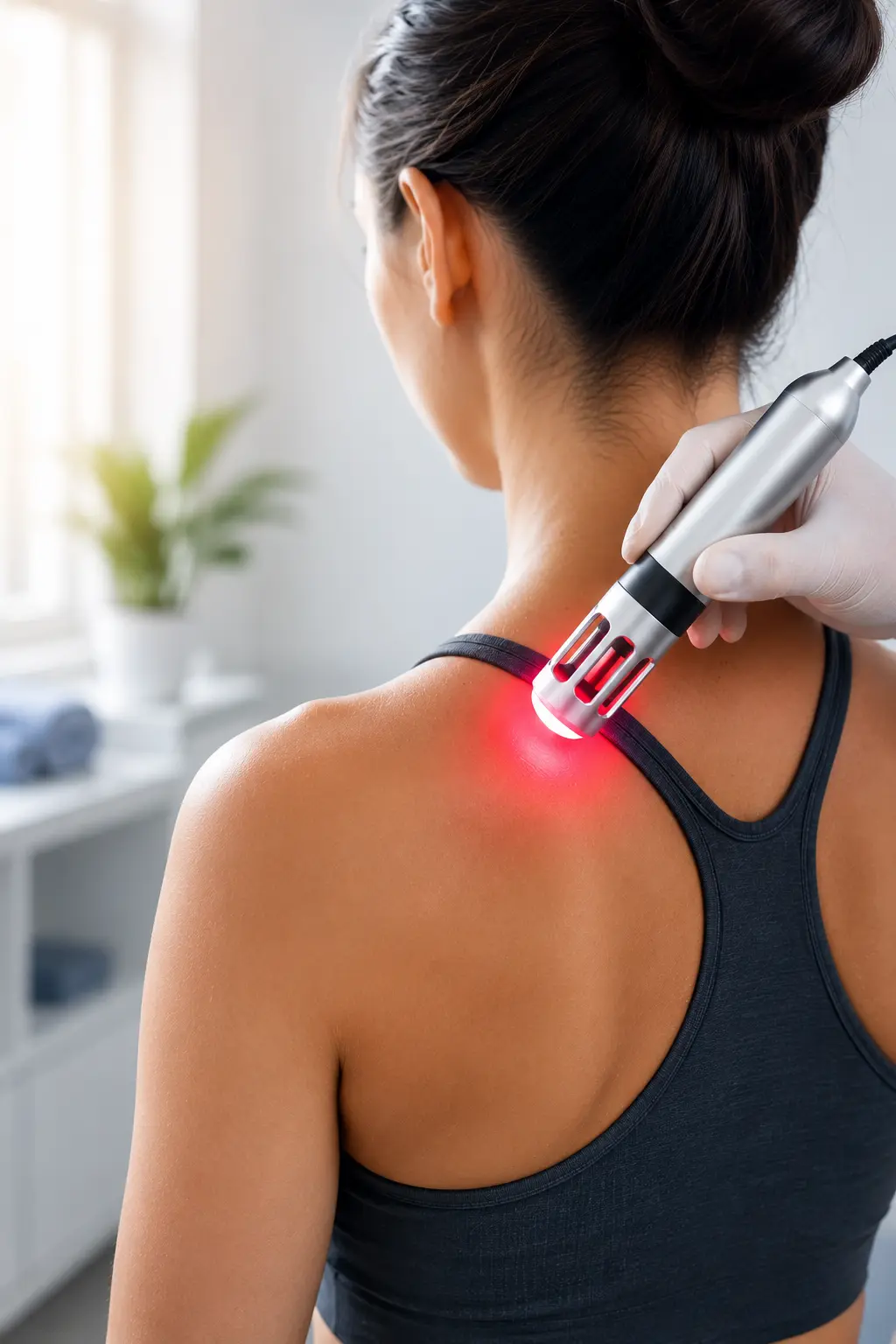
Cold laser therapy — also known as low-level laser therapy (LLLT) or photobiomodulation — uses low-intensity light energy delivered at specific wavelengths to targeted tissue. Unlike surgical lasers, it generates no meaningful heat and does not cut or damage tissue.
At the cellular level, the light energy is thought to stimulate mitochondrial activity. This may support tissue repair, reduce inflammation, and modulate pain signaling. The therapy is non-invasive, typically painless, and requires no recovery time.
The term "photobiomodulation" (PBM) is now preferred by many researchers as it more accurately describes the biological process — light (photo) modulating biological activity — rather than focusing on the delivery method ("laser") or its temperature ("cold").
How Does Cold Laser Therapy Work at the Cellular Level?
Understanding the science helps build trust. At its core, photobiomodulation is about stimulating the body's own healing machinery.
- Mitochondrial Stimulation: The primary target is the mitochondria, often called the powerhouses of the cell. The light energy is absorbed by an enzyme called cytochrome C oxidase.
- Increased ATP Production: This absorption triggers a cascade of events that increases the production of adenosine triphosphate (ATP), the cellular fuel for all biological processes.
- Reduced Oxidative Stress: PBM helps modulate reactive oxygen species (ROS), which are byproducts of cellular metabolism that can cause damage and inflammation.
- Enhanced Cellular Function: With more energy and reduced stress, cells function better. This promotes tissue repair, reduces inflammation, and modulates pain signaling.
Is Cold Laser Therapy Scientifically Proven?
Quick Answer: Cold laser therapy has a substantial body of peer-reviewed research behind it, with studies showing benefits for pain reduction and inflammation in a range of musculoskeletal conditions. The evidence is promising but not uniform across all conditions or patient populations.
What Research Shows
The published literature on low-level laser therapy is substantial and spans several decades. Studies have examined its effects on acute and chronic pain, post-injury inflammation, soft tissue healing, and musculoskeletal conditions including arthritis and tendinopathy. Systematic reviews and meta-analyses — which pool results across multiple studies — have generally found statistically significant reductions in pain scores and inflammation markers in treated groups compared to controls.
Research involving neck pain, lower back pain, and joint conditions has produced some of the most consistent findings. For instance, a widely cited Cochrane Review found that LLLT provided significant pain relief and functional improvement for chronic neck pain compared to placebo. Studies examining sports injuries and tendon conditions have also shown measurable improvements in healing timelines and pain levels in treated subjects.
What Researchers Agree On
Most researchers who study LLLT agree that the treatment produces real, measurable biological effects at the cellular level. The anti-inflammatory and analgesic mechanisms appear consistent with what is observed in well-designed trials. There is also broad agreement that results differ by condition — some diagnoses respond more reliably than others — and that treatment parameters such as wavelength, dosage, and frequency matter significantly.
What Researchers Still Debate
The primary criticisms in the literature center on study design rather than on the underlying mechanism. Study quality varies considerably — sample sizes are often small, treatment protocols differ between studies, and blinding is difficult when comparing active laser to a placebo device. This makes direct comparisons across studies challenging.
There is also ongoing debate about optimal treatment parameters. The same condition studied at different wavelengths or energy doses can produce different results, which makes it difficult to establish universal protocols. Researchers generally call for larger, more standardized trials rather than dismissing the therapy outright.
Current Evidence Suggests:
- ✔ Moderate Evidence for neck pain
- ✔ Moderate Evidence for lower back pain
- ✔ Promising Evidence for arthritis (especially knee osteoarthritis)
- ✔ Emerging Evidence for neuropathy
- ✔ Good Support for tendinopathy (e.g., tennis elbow, Achilles)
Why Research Results Sometimes Conflict
It's important to understand why you might read conflicting reports about cold laser therapy. The issue is often the complexity of the therapy itself, not a failure of the concept. Several factors cause this variability:
- Different Laser Devices: Devices vary widely in wavelength (e.g., 660nm vs. 980nm) and power output. A machine used in one study may be quite different from another.
- Different Protocols: The number of sessions, session duration, and dosage (energy density) are critical. An ineffective protocol doesn't mean the therapy is ineffective.
- Small Sample Sizes & Methodology: Many studies are small, making it harder to detect a real effect. Blinding patients is also difficult as they can sometimes feel the treatment.
- Different Patient Populations: A condition like "back pain" has many root causes. A therapy that works for a muscle strain may not work for a herniated disc.
This is why large, well-designed, and standardized reviews (like those from the Cochrane Collaboration) are the gold standard for evaluating evidence.
Is Cold Laser Therapy FDA Approved?
Quick Answer: Certain cold laser devices have received FDA clearance in the United States. FDA clearance means the device has been reviewed and found to be safe and substantially equivalent to an already-cleared device — it does not constitute approval of specific cure or treatment claims.
The distinction between FDA clearance and FDA approval matters for patients evaluating any medical device or therapy. Clearance confirms that a device meets safety standards and is appropriate for specific intended uses. Providers are responsible for applying cleared devices within the scope of supported evidence and appropriate clinical judgment.
When considering cold laser therapy, patients can ask their provider whether the device being used holds FDA clearance and what conditions it has been cleared to address.
What Conditions Have Been Studied?
Research into low-level laser therapy has covered a range of conditions. The following represent areas with a meaningful body of published literature.
| Condition | Evidence Strength | Typical Outcomes | What Research Shows |
|---|---|---|---|
| Neck Pain | Moderate | Pain relief, improved function | Cochrane Review found significant benefits over placebo |
| Lower Back Pain | Moderate | Pain reduction, less disability | Meta-analyses show consistent pain score improvements |
| Osteoarthritis (Knee) | Promising | Reduced pain, less morning stiffness | Several RCTs show positive short-term results |
| Tendinopathy (Tennis Elbow, Achilles) | Good Support | Faster healing, reduced pain | Multiple studies show favorable outcomes |
| Peripheral Neuropathy | Emerging | Improved sensation, reduced pain | Early studies promising; more research needed |
Back Pain
Multiple clinical trials and systematic reviews have examined LLLT for both acute and chronic lower back pain. Several have found statistically significant reductions in pain intensity and disability scores compared to sham treatments, particularly for non-specific mechanical back pain. The evidence is considered moderate in quality and is cited in several clinical practice guidelines as a reasonable adjunct therapy.
Neck Pain
Neck pain is one of the more thoroughly researched areas for LLLT. As mentioned, a widely cited Cochrane review found that low-level laser therapy provided significant pain relief and functional improvement for chronic neck pain compared to placebo. Effects were most consistent when appropriate dosing parameters were used.
Arthritis
Studies on osteoarthritis — particularly of the knee — have shown reductions in pain and morning stiffness with LLLT. Research on rheumatoid arthritis has also produced positive results for short-term pain and inflammation relief, though researchers note that long-term data is still developing.
Sports Injuries (Tendinopathy)
Tendinopathy, muscle injuries, and joint sprains have all been studied in the context of LLLT. Research in athletic populations has shown faster return-to-activity timelines and reduced pain scores in some trials. Tendon conditions such as lateral epicondylitis (tennis elbow) and Achilles tendinopathy have received particular attention, with several studies showing favorable outcomes.
Neuropathy Symptoms
Research into LLLT for peripheral neuropathy is an emerging area. Some studies have reported improvements in sensation, pain levels, and nerve conduction in patients with diabetic peripheral neuropathy. The evidence base here is smaller than for musculoskeletal conditions, but findings have been encouraging enough to support continued investigation.
Does Cold Laser Therapy Actually Work?
Based on the available evidence, cold laser therapy produces real effects for a meaningful number of patients — particularly those with musculoskeletal pain, soft tissue injuries, and certain inflammatory conditions. It is not a universal solution, and it does not work identically for every person or every diagnosis.
Is It Worth It?
The value proposition depends on the condition and patient. For someone with moderate knee pain from osteoarthritis, it can be a very effective, non-invasive, drug-free option. For a person with a complex, multi-factorial pain condition, it may be one helpful tool among many.
Why Doesn't Cold Laser Therapy Work for Everyone?
- Incorrect Diagnosis: Applying the therapy to the wrong structural issue (e.g., a severe ligament tear) won't be effective.
- Advanced Condition: In cases of severe degeneration or chronic nerve damage, the potential for improvement may be more limited.
- Inconsistent Treatment: Getting one session here and there is unlikely to produce the cumulative effect needed for lasting change.
- Patient Expectations: Believing it's a "miracle cure" can lead to disappointment. It works best as part of a broader plan.
Myth vs. Fact
- Myth: Cold laser therapy is fake or unproven.
Fact: Research supports its use for several musculoskeletal conditions, with Cochrane reviews showing significant benefits. - Myth: It burns or damages tissue.
Fact: It generates little to no heat and is non-invasive. - Myth: It works instantly after one session.
Fact: Most patients require a course of multiple sessions for meaningful results.
Potential Advantages and Limitations
Potential Advantages
- Non-invasive — no needles, no incisions, no surgical risk
- Drug-free option for patients seeking to avoid or reduce medication
- Minimal to no downtime following sessions
- Generally well tolerated, with a low reported side-effect profile
- Can be used alongside other therapies without significant contraindications
Limitations
- Not effective for every condition or every patient
- Multiple sessions are typically required before meaningful results emerge
- Study quality and protocol variability make it difficult to draw universal conclusions
- Best outcomes depend on accurate diagnosis and appropriate patient selection
- Not a replacement for treatment of serious structural conditions requiring medical or surgical intervention
Why Treatment Parameters Matter
The effectiveness of cold laser therapy hinges on more than just the device itself. Key parameters must be correct for the specific condition.
- Wavelength: The wavelength of light determines its penetration depth. Different tissues (skin, muscle, bone) absorb different wavelengths. Near-infrared wavelengths (800-900nm) penetrate deeper than visible red light.
- Power Output & Dosage (Energy Density): The amount of energy delivered to the tissue is critical. Too little may have no effect; too much can be inhibitory. This is often a source of variability in study results.
- Treatment Duration & Frequency: Acute injuries may respond to shorter, more frequent sessions, while chronic conditions may require longer, less frequent applications over an extended period.
Cold Laser Therapy vs. Other Treatments
Cold Laser Therapy vs. Red Light Therapy
While often used interchangeably, there are distinctions. Red light therapy typically uses wavelengths in the visible red spectrum (e.g., 630-660nm) and is often used for skin health and superficial tissue. Cold laser therapy often uses near-infrared wavelengths (e.g., 800-900nm) to penetrate deeper into muscles and joints. However, both are forms of photobiomodulation and share similar mechanisms.
Cold Laser Therapy vs. Physical Therapy
They are not mutually exclusive; they are complementary. Physical therapy (PT) focuses on restoring movement, strength, and function through exercise and manual techniques. Cold laser therapy can be a powerful adjunct to PT by reducing pain and inflammation, making it easier for the patient to participate in and benefit from their exercises.
Cold Laser Therapy vs. Cortisone Injections
Cortisone injections are a powerful anti-inflammatory that can provide rapid relief but may carry side effects like tissue weakening and are not a long-term solution. Cold laser therapy works more slowly but is non-invasive, promotes healing, and has virtually no systemic side effects. The choice depends on the patient's condition, goals, and medical history.
Who Should Avoid Cold Laser Therapy?
While generally safe, there are contraindications:
- Directly over the eyes
- Over the thyroid gland
- Over the abdomen of pregnant women
- Over areas of cancerous tumors or suspected malignancies
- Over a recently injected area with a cortisone shot (usually wait)
What Should Patients Consider Before Trying Cold Laser Therapy?
The most important starting point is an accurate diagnosis. Cold laser therapy applied to the wrong condition or without a clear understanding of the underlying problem is unlikely to produce meaningful results. A thorough clinical evaluation helps determine whether the therapy is appropriate and what outcomes are reasonable to expect.
Patients should feel comfortable asking their provider about the evidence supporting the recommendation, the specific device being used and whether it has FDA clearance, and what a realistic treatment course looks like — including how progress will be assessed over time. Providers who can answer these questions clearly are a positive sign.
You May Be a Good Candidate If You Have:
- ✓ Chronic neck or lower back pain
- ✓ Osteoarthritis in a joint (e.g., knee, shoulder)
- ✓ Tendon injuries (e.g., tennis elbow, Achilles)
- ✓ Sports injuries
- ✓ Neuropathy symptoms
When to Speak With a Healthcare Professional
If you are experiencing persistent pain, recurring flare-ups, or symptoms that are affecting your daily activities, a professional evaluation is the appropriate next step — regardless of which therapies you are considering. A qualified provider can assess the source of your pain, determine which treatment approaches are supported by evidence for your specific condition, and help you set realistic goals.
Pain that is accompanied by neurological symptoms such as numbness, tingling, or weakness deserves prompt evaluation. The same applies to pain following injury, pain that has not responded to prior treatment, or any symptoms that are worsening over time.
Is cold laser therapy right for your pain?
Our team can help determine if this evidence-based treatment fits your needs and create a personalized care plan.
Schedule a Consultation →Cold Laser Therapy at Absolute Integrative Physical Medicine
At Absolute Integrative Physical Medicine in Vacaville, cold laser therapy is one component of a broader, evidence-informed approach to pain relief. We begin with a comprehensive evaluation to understand the root cause of each patient's condition before recommending any course of treatment. Patients across Solano County — including those coming from Fairfield and Dixon — receive individualized care plans built around their diagnosis and goals, not a one-size-fits-all approach.
If you are curious about whether cold laser therapy may be appropriate for your situation, we are happy to discuss it as part of an evaluation. Learn more about our cold laser therapy service page or call us at (707) 474-5688.
Frequently Asked Questions
References
Authoritative Sources
1. Cochrane Database of Systematic Reviews. Low-level laser therapy for neck pain. cochrane.org
2. National Institutes of Health. Photobiomodulation Therapy for Pain. PubMed Central
3. U.S. Food and Drug Administration. Device Classification: Low Level Laser Therapy. fda.gov
4. World Association for Photobiomodulation Therapy. Clinical Guidelines and Best Practices. waltpbm.com
Final Thoughts
Cold laser therapy is a legitimate, evidence-based treatment that has helped many patients find relief from musculoskeletal pain and inflammation. While it is not a miracle cure and results vary, the science behind photobiomodulation is robust and continues to grow. If you're struggling with persistent pain and wondering whether cold laser therapy might help, our team at Absolute Integrative Physical Medicine in Vacaville is here to provide a comprehensive evaluation and personalized care plan. Learn more about cold laser therapy or call us at (707) 474-5688.
This content has been reviewed by our medical team and is intended for educational purposes only. It should not be used as a substitute for professional medical advice, diagnosis, or treatment.