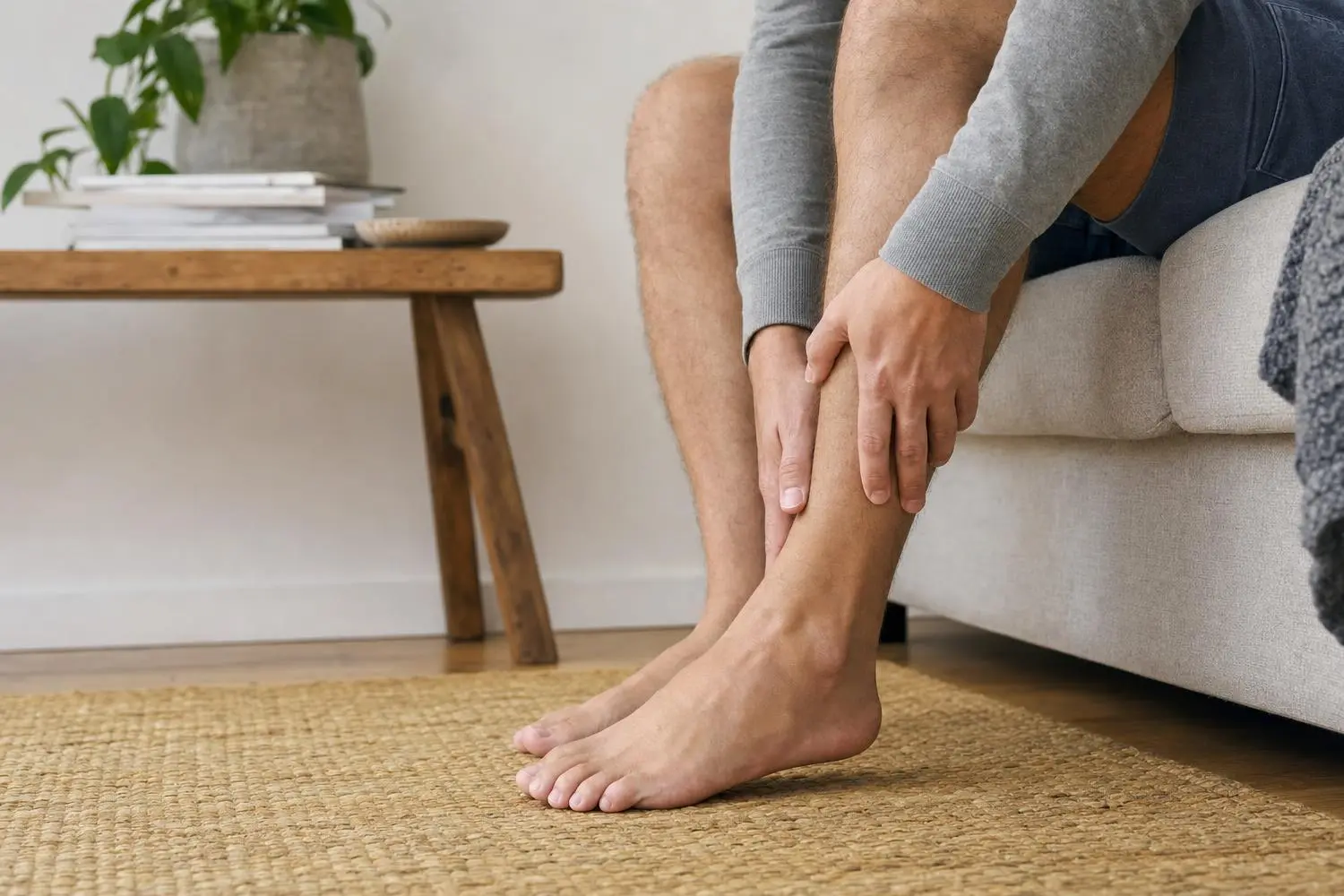
A cold sensation in the legs despite warm skin is a type of altered sensory perception in which the nervous system misinterprets temperature signals. The skin itself may have a normal temperature, but damaged or irritated nerves can cause the brain to perceive it as cold. This symptom is medically referred to as thermal dysesthesia and commonly occurs with peripheral nerve dysfunction.
If your legs feel cold even though they are warm to the touch, the sensation may come from how your nerves process temperature rather than your skin's actual temperature. Conditions such as peripheral neuropathy, nerve compression, or certain neurological disorders can alter how the brain interprets sensory signals.
This mismatch between how your legs feel and how they actually feel to the touch can be confusing, and even a little unsettling. The good news is that this is a recognized symptom pattern with a set of well-understood possible causes.
Is It Normal for Legs to Feel Cold When They Aren't?
Is it normal for legs to feel cold when they aren't actually cold?
A mismatch between perceived and actual temperature is not unusual, and it often points to how sensory nerves are functioning rather than a problem with blood flow alone. It is worth attention, but it is not automatically a sign of a serious condition.
Perceived temperature and actual skin temperature are processed through two separate systems. Skin temperature is a physical measurement. Perceived temperature is your brain's interpretation of signals sent by sensory nerves in the skin.
When those sensory nerves misfire or send distorted signals, the brain can register "cold." A thermometer or someone else's hand would tell a different story.
How Do Nerves Detect Temperature?
How do nerves detect temperature in the first place?
Specialized sensory nerve endings in the skin detect temperature changes and send electrical signals through the peripheral nervous system to the brain. The brain then interprets those signals to produce the sensation of hot or cold.
This process depends on a healthy relay between three parts of the system.
- Sensory nerve endings in the skin detect temperature changes at the surface
- The peripheral nervous system carries that signal from the skin toward the spinal cord and brain
- The brain interprets the incoming signal and produces the sensation you actually feel
Damage or dysfunction at any point along this path can create a mismatch between what your skin is doing and what you feel.
Common Causes of Legs Feeling Cold But Warm to the Touch
A cold sensation in the legs despite normal skin temperature can happen for several reasons, including changes in nerve signaling, circulation issues, or other medical conditions. Below are the most common ones.
Peripheral Neuropathy
Can neuropathy make your legs feel cold?
Yes. Peripheral neuropathy can disrupt the nerves responsible for sensing temperature, causing your legs to feel cold even when the skin is actually warm. This altered sensation happens because damaged nerves send inaccurate signals to the brain.
Peripheral neuropathy is one of the most common explanations for this exact symptom pattern. Understanding what neuropathy is can help explain why nerve dysfunction may affect sensations like temperature, pain, and touch. Learn more about common neuropathy symptoms and how they can present in the legs and feet.
Nerve Compression
Compressed nerves can also distort temperature signals. This includes issues like sciatica, a herniated disc, or spinal stenosis. Problems associated with the spine, including certain causes of lower back pain, may affect nearby nerves and create unusual sensations in the legs. In these cases, pressure on the nerve root changes the signal long before it reaches the brain.
Diabetes
Diabetic neuropathy develops when prolonged high blood sugar damages small nerve fibers. Cold sensations in the feet and legs may occur when diabetic neuropathy affects the nerves responsible for temperature sensation.
Multiple Sclerosis
Multiple sclerosis affects the central nervous system and can disrupt how temperature signals are relayed and interpreted, sometimes producing cold or burning sensations in the legs.
Vitamin B12 Deficiency
Nerves rely on B vitamins to maintain their protective coating and function properly. A B12 deficiency can lead to nerve signaling problems, including altered temperature perception.
Anxiety and Stress
Stress and anxiety can temporarily affect sensory perception, sometimes producing a cold or tingling feeling in the legs. Persistent symptoms, however, still warrant a medical evaluation rather than being dismissed as "just stress."
Complex Regional Pain Syndrome (CRPS)
CRPS is a less common but recognized condition that can follow an injury. It can produce dramatic changes in temperature perception, skin color, and sensitivity in the affected limb.
Circulation Problems
Is poor circulation the same as neuropathy?
No. Poor circulation and neuropathy can produce similar cold sensations, but they are different conditions. True circulation problems tend to come with pale skin, slow-healing wounds, or weak pulses in addition to coldness.
Poor circulation can absolutely create a cold sensation, and in these cases the skin often is objectively cooler to the touch as well. What sets true circulation problems apart is the presence of additional signs.
- Pale or bluish skin color
- Slow-healing cuts or wounds on the legs or feet
- Weak or hard-to-find pulses in the feet
If your skin genuinely feels cool to a family member's touch and shows these additional signs, circulation may be playing a larger role than nerve signaling.
Experiencing these symptoms?
Don't wait for the sensation to worsen. A professional evaluation can identify the underlying cause and get you on the path to relief.
Schedule an Evaluation →Nerve Pain vs. Poor Circulation: How to Tell Them Apart
How can I tell if my cold legs are from nerve pain or poor circulation?
Nerve-related cold sensations usually occur while the skin still feels warm to the touch, often alongside tingling or burning. Circulation-related cold sensations usually come with skin that is genuinely cool, plus color changes and pain that worsens with walking.
| Nerve-Related Symptoms | Circulation-Related Symptoms |
|---|---|
| Skin often feels warm to the touch despite a cold sensation | Skin often feels genuinely cool or cold to the touch |
| Burning, tingling, or electric sensations | Aching, cramping, or heaviness |
| Numbness in a stocking or glove pattern | Numbness tied to specific blood vessels or areas |
| Skin color usually looks normal | Skin may look pale, bluish, or blotchy |
| Pain may occur at rest or at night | Pain often worsens with walking and eases with rest |
| Walking does not reliably change symptoms | Walking distance is often limited by pain (claudication) |
Other Symptoms That May Occur
What other symptoms often accompany cold-feeling legs?
Cold-feeling legs are often accompanied by tingling, numbness, burning, or a pins-and-needles sensation. Weakness, balance issues, and hypersensitivity to touch can also occur depending on the underlying cause. Cold sensations may occur alongside other nerve-related symptoms, including burning, tingling, and nerve pain.
- Tingling or a "pins and needles" feeling
- Numbness
- Burning sensations
- Weakness in the legs
- Balance issues
- Hypersensitivity to touch
When Should You See a Healthcare Provider?
When should I see a doctor for cold legs?
See a healthcare provider if the sensation lasts for weeks, worsens, or comes with numbness, weakness, or difficulty walking. Sudden-onset symptoms deserve prompt evaluation rather than a wait-and-see approach.
- Symptoms lasting several weeks or longer
- Worsening numbness over time
- New or increasing weakness
- Difficulty walking
- Pain that interferes with daily life
- Sudden onset of symptoms
A proper evaluation can identify the specific cause behind your symptoms. Our Neuropathy Signs and Symptoms page outlines what our team looks for during that process.
How Is This Symptom Evaluated?
How do doctors evaluate cold-feeling legs?
Evaluation typically starts with a physical and neurological exam, followed by blood tests to check for deficiencies or diabetes. Imaging or nerve conduction studies may follow if a structural or nerve-specific cause is suspected.
- A physical examination
- A neurological exam
- Blood tests
- Imaging, when appropriate
- Nerve conduction studies
- Electromyography (EMG)
Can Lifestyle Affect Nerve Health?
Can lifestyle changes affect nerve health and temperature sensations?
Yes. Managing blood sugar, eating a nutrient-dense diet, staying active, and limiting alcohol and tobacco use all support healthy nerve function over time.
- Managing blood sugar levels
- Eating a nutrient-dense diet
- Staying physically active
- Quitting smoking
- Limiting alcohol intake
- Maintaining a healthy body weight
Key Takeaways
- A cold feeling in legs that are actually warm to the touch usually points to a nerve signaling issue rather than a temperature problem
- Peripheral neuropathy, nerve compression, diabetes, MS, B12 deficiency, anxiety, and CRPS are all recognized possible causes
- True circulation problems tend to come with genuinely cool skin, color changes, and pain that worsens with walking
- Additional symptoms like tingling, numbness, burning, or weakness often accompany the cold sensation
- Symptoms lasting weeks, worsening, or paired with weakness or difficulty walking deserve a professional evaluation
- Diagnosis typically combines a physical exam, blood work, and sometimes nerve conduction studies or EMG
- Lifestyle habits like blood sugar management and good nutrition support long-term nerve health
Frequently Asked Questions
If your cold sensation is persistent, worsening, or accompanied by numbness, weakness, or balance problems, a professional evaluation can help identify the underlying cause. Learn more about neuropathy symptoms and evaluation through our Neuropathy Signs and Symptoms page.
References
Mayo Clinic: Cold feet: Causes
National Institute of Neurological Disorders and Stroke (NINDS): Peripheral Neuropathy Information Page
Centers for Disease Control and Prevention (CDC): Diabetes and Nerve Damage
American Diabetes Association: Understanding Neuropathy
Johns Hopkins Medicine: Peripheral Neuropathy
This content has been reviewed by our healthcare professionals for accuracy and educational purposes. It should not be used as a substitute for professional medical advice, diagnosis, or treatment.