
Yes, poor sleep can make chronic pain feel worse. Sleep is when the body repairs tissue, regulates hormones, and calms the nervous system down.
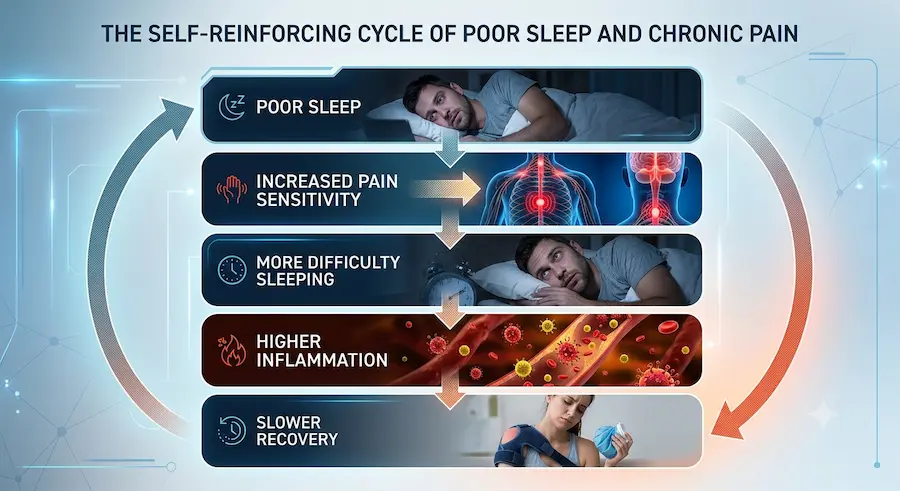
When sleep is disrupted, pain and rest start working against each other. Poor sleep can raise pain sensitivity, and pain can make it harder to fall or stay asleep.
Over time, this back-and-forth becomes a cycle that is difficult to break without addressing both sides. This article explains why the connection happens and what may help.
Key Takeaways
- Poor sleep can heighten pain sensitivity and slow tissue repair, making chronic pain feel worse.
- Sleep helps regulate inflammation; disrupted sleep can increase inflammatory chemicals.
- Improving sleep hygiene and addressing underlying causes are essential for breaking the pain-sleep cycle.
- A statistic from the CDC highlights that adults with chronic pain are more likely to experience sleep deficiency.
Table of Contents
- The Connection Between Sleep and Pain
- Why Lack of Sleep Can Increase Pain
- Conditions Commonly Affected by Poor Sleep
- Signs Your Sleep May Be Affecting Your Pain
- Tips to Improve Sleep When Living With Chronic Pain
- Why Is Sleep Important for Healing?
- When Persistent Pain Should Be Evaluated
- Frequently Asked Questions
The Connection Between Sleep and Pain
During deep sleep, the body repairs damaged tissue and balances hormones. This is also when the nervous system gets a chance to reset. Skipping this recovery window affects more than energy levels.
Pain and sleep have a two-way relationship. Poor sleep tends to increase how much pain a person feels the next day, and persistent pain often makes it harder to fall asleep or stay asleep through the night.
Why Lack of Sleep Can Increase Pain
Increased Pain Sensitivity
Sleep helps regulate the areas of the brain that process pain. Without enough rest, that regulation weakens, and pain signals can register more strongly than they otherwise would. This means that after a night of poor sleep, even mild discomfort can feel noticeably more intense. During proper rest, the nervous system gets an opportunity to recover from the constant sensory and mechanical demands of waking life. When sleep is disrupted, the body can get locked in a high-alert sympathetic mode, which over-stimulates pain receptors and keeps the nervous system on alert even after an injury should have healed.
More Inflammation
Sleep helps keep inflammatory chemicals in the body balanced. When sleep is cut short or interrupted, these chemicals can rise, which may contribute to:
- Joint pain and persistent joint stiffness
- Muscle soreness and aches that come and go
- Back pain, including chronic low back discomfort
- Neck pain and localized tension
- Arthritis discomfort
- Shooting or burning nerve pain
- Slow tissue recovery and prolonged physical fatigue
Slower Tissue Repair
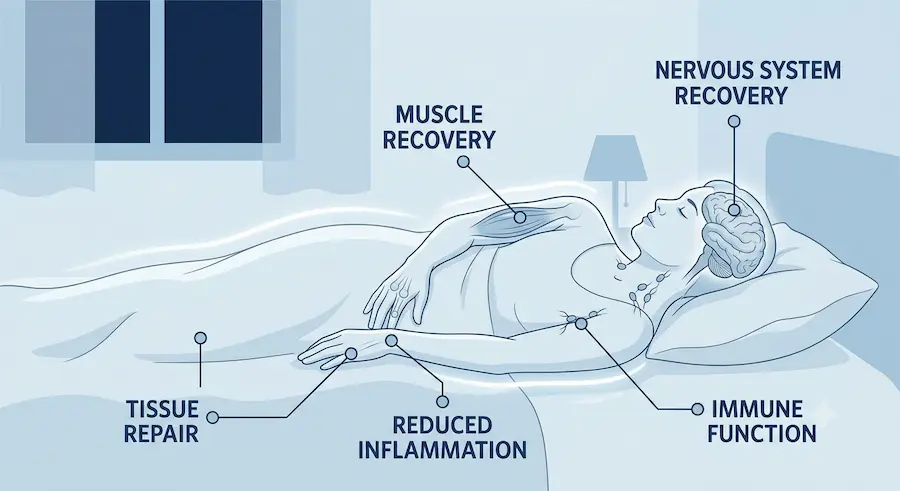
Deep sleep supports muscle recovery, tissue repair, and healthy immune function. These processes are most active during the deepest stages of sleep, often later in the night.
When sleep quality is reduced night after night, recovery from injury or physical strain may take noticeably longer. Even small improvements in sleep depth can support a faster return to normal activity.
Research Insight: According to the Centers for Disease Control and Prevention (CDC), adults with chronic pain are more likely to have sleep deficiency, with approximately 1 in 3 adults with chronic pain reporting insufficient sleep, compared to 1 in 5 adults without pain.
Conditions Commonly Affected by Poor Sleep
Sleep quality can influence how many chronic conditions feel day to day. This is educational context, not a diagnosis, and each condition should be evaluated individually.
- Low back pain — Increased inflammatory chemicals from poor sleep can worsen back discomfort, making chronic low back pain feel noticeably more intense after a restless night.
- Neck pain — Localized tension and neck pain can build up when the nervous system misses its opportunity to fully reset and recover during proper rest.
- Arthritis — Disrupted sleep can raise inflammatory markers in the body, contributing directly to heightened joint pain and persistent joint stiffness the following day.
- Fibromyalgia — A lack of deep sleep can lock the body in a high-alert sympathetic mode, which over-stimulates pain receptors and intensifies muscle soreness and widespread aches.
- Sciatica — When brain regulation of pain signals is weakened by low sleep quality, sharp, shooting, or burning nerve discomfort can register much more strongly.
- Neuropathy — Ongoing nerve pain can feel amplified after poor rest, as sleep deprivation leaves the nervous system highly sensitive to even mild sensory demands.
- Headaches — Skipping vital recovery windows prevents the body from balancing its chemical systems, which can trigger or worsen persistent headaches.
- Sports injuries — Because deep sleep supports vital muscle recovery and immune function, consecutive nights of insufficient rest slow down tissue repair and prolong physical fatigue.
Signs Your Sleep May Be Affecting Your Pain
These signs can build gradually, which makes them easy to attribute to stress or a busy schedule instead of sleep quality.
- Waking up stiff
- Feeling sore every morning
- Increased pain after several poor nights
- Fatigue throughout the day
- Difficulty concentrating
- Pain medications seem less effective
- Mood changes
Tips to Improve Sleep When Living With Chronic Pain
Small, consistent habits tend to make a bigger difference than dramatic changes. Consider starting with just a few of the following:
- Keep a consistent bedtime
- Reduce screen time before bed
- Create a cool, dark sleeping environment
- Stay physically active during the day
- Stretch gently before bed
- Practice relaxation or breathing exercises
- Avoid caffeine late in the day
- Use supportive pillows and mattresses when appropriate
Why Is Sleep Important for Healing?
Quality sleep is foundational to the body's healing process. During deep sleep, several critical restorative functions take place:
- Tissue repair: Growth hormone is released, which helps repair damaged tissues and build muscle.
- Muscle recovery: Sleep allows muscles to relax and recover from the demands of daily activity, reducing soreness and stiffness.
- Immune function: Adequate sleep supports a healthy immune response, helping the body fight off infection and reduce inflammation.
- Hormone regulation: Sleep helps balance hormones that control stress, appetite, and metabolism, all of which can affect pain perception.
- Recovery from daily physical stress: The nervous system resets during sleep, reducing the cumulative effects of daily physical and mental stress.
When sleep is compromised, these processes are less effective, which can prolong recovery and increase the perception of pain.
When Persistent Pain Should Be Evaluated
Improving sleep habits helps many people manage day-to-day discomfort. If pain still disrupts sleep on a regular basis, or persists despite consistent healthy habits, it may point to an underlying issue that deserves a closer look.
At Absolute Integrative Physical Medicine, our Vacaville team offers chiropractic care and integrative evaluations to help identify what may be contributing to your pain and sleep difficulties, as one part of a broader wellness strategy.
Struggling with pain that disrupts your sleep?
Our team can help identify the root cause and build a comprehensive care plan to reduce your symptoms and improve your rest.
Find the Cause of Your Pain →Frequently Asked Questions
People Also Ask
- Can poor sleep cause muscle pain? Yes, poor sleep can increase muscle soreness and tension by raising inflammatory markers and reducing the body's ability to repair tissue overnight.
- How many hours of sleep do I need with chronic pain? Most adults need 7-9 hours of quality sleep per night. Those with chronic pain may need even more to support the body's healing processes.
- Does sleep affect the nervous system? Yes, sleep allows the nervous system to reset and recover. Poor sleep can keep the body in a high-alert state, amplifying pain signals.
- Can sleep deprivation cause chronic pain? Sleep deprivation itself may not cause chronic pain, but it can lower pain tolerance and make existing pain feel more intense, potentially contributing to the development of chronic pain conditions.
- What sleep position is best for back pain? Sleeping on your back with a pillow under your knees or on your side with a pillow between your knees are often recommended to maintain spinal alignment and reduce back pain.
Final Thoughts
Poor sleep and chronic pain often feed into each other, but the cycle is not permanent. Improving sleep quality can support the body's natural healing process, reduce pain sensitivity, and promote better recovery over time.
If pain continues to interfere with your sleep or daily activities despite healthy habits, a professional evaluation can help identify the underlying cause.

References
This article is intended for educational purposes only and should not be considered medical advice, diagnosis, or treatment. Always consult a qualified healthcare professional regarding any medical condition.