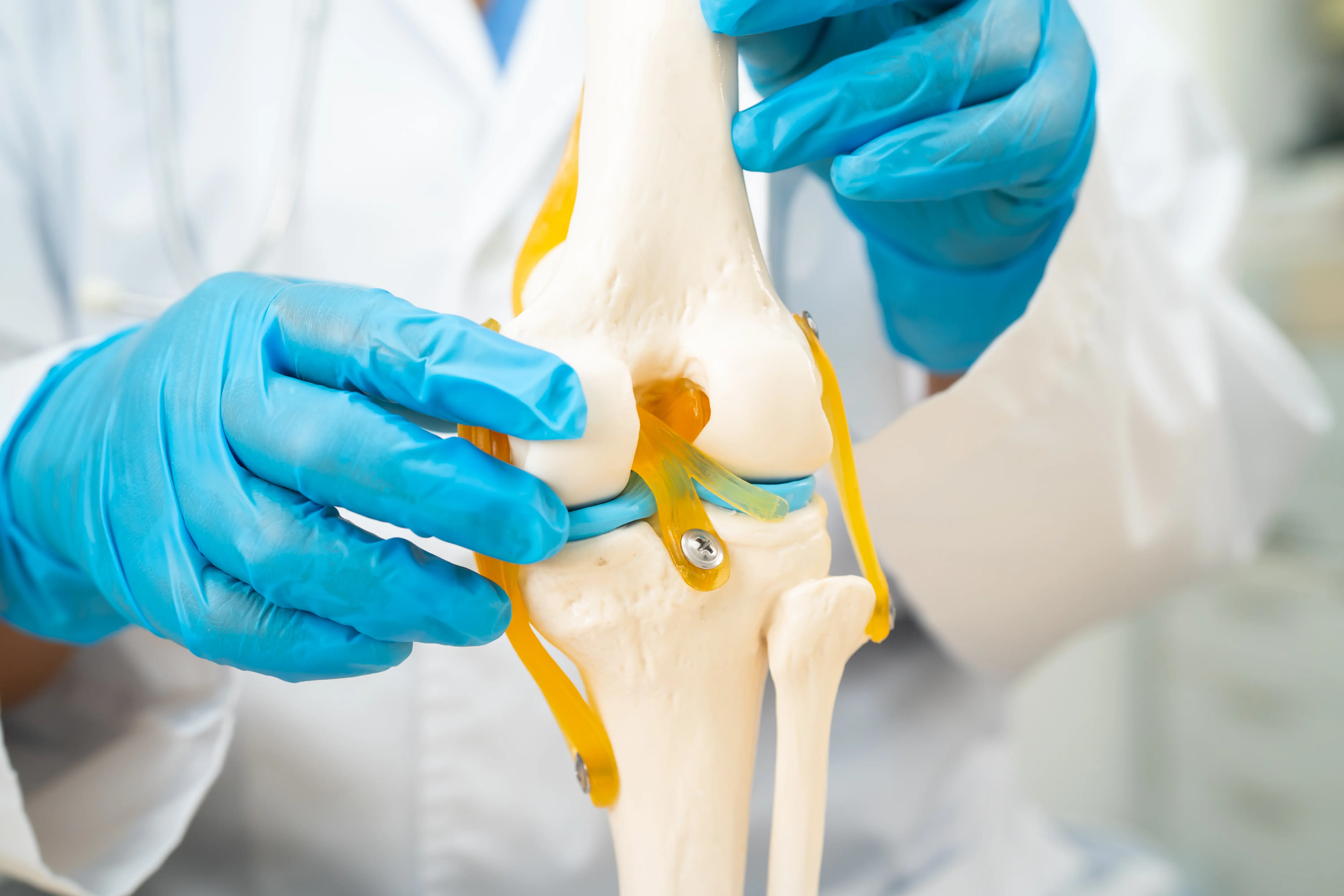
You push yourself up from a chair and your knee cracks. You take a step and feel your hip pop with each stride. You climb stairs and hear a grinding sound with every bend. These sensations are familiar to many people, and most of the time they are nothing to worry about.
But persistent hip and knee joint popping with pain, stiffness, or swelling is worth paying attention to. Instability or a catching sensation can also signal a problem. The difference often comes down to what is happening inside the joint.
This is where crepitus becomes relevant. Crepitus describes any crackling, clicking, or grinding noise a joint produces during movement. Proper alignment plays a central role in keeping hips and knees functioning well, and when it breaks down, joints can move in ways they were not designed for.
Table of Contents
- Why Do My Hip and Knee Joints Pop?
- What Is Crepitus?
- When Is Joint Popping a Cause for Concern?
- Can Poor Alignment Cause Hip and Knee Popping?
- Conditions Commonly Associated With Hip and Knee Crepitus
- Non-Surgical Treatment Options for Hip and Knee Joint Popping
- How Chiropractic Care Can Help Improve Joint Tracking and Stability
- When Should You Seek Professional Evaluation?
- Frequently Asked Questions
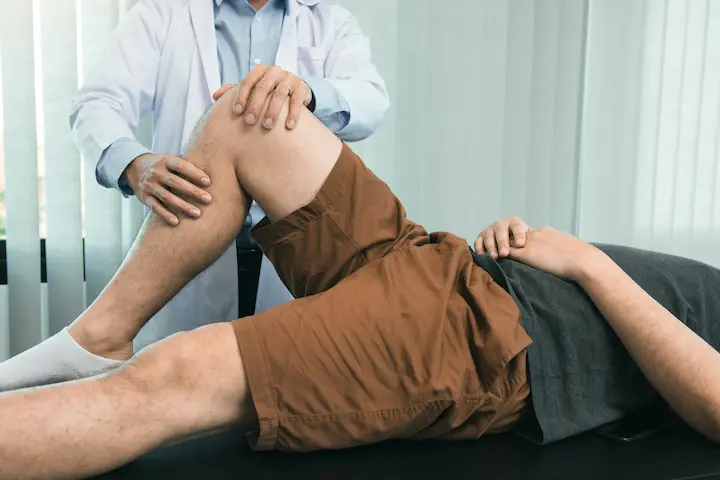
Why Do My Hip and Knee Joints Pop?
Joint noises have several possible causes. Gas bubbles releasing in the joint fluid are a common and harmless source of popping. Tendons or ligaments can also shift across bone structures during movement.
In other cases, cartilage changes or joint wear play a role. When the smooth surface of the cartilage begins to roughen, it can create friction during movement, resulting in audible grinding or clicking.
Not all popping signals damage and understanding the cause is the starting point for the right response. It is important to distinguish between these physiological noises and sounds caused by structural issues like joint wear or ligamentous shifting.
What Is Crepitus?
Crepitus is the medical term for sounds and sensations a joint produces during movement. It can present as cracking, clicking, or snapping. It may also feel like a grinding or popping sensation.
Painless crepitus is generally considered normal and does not require treatment. But crepitus in the knee or hip that comes with pain tells a different story. Painful grinding or clicking can point to friction, cartilage changes, or dysfunction within the joint.
When Is Joint Popping a Cause for Concern?
Most joint noises on their own do not require treatment, as they are often a normal byproduct of physiological movement. However, the following symptoms appearing alongside popping suggest the joint may need a closer professional evaluation to prevent further issues:
- Persistent pain during or immediately following movement
- Visible swelling or warmth around the joint area
- Significant stiffness, especially after periods of rest or in the morning
- Noticeably reduced range of motion or flexibility
- Locking, catching, or snapping sensations that impede fluid motion
- Subjective feelings of instability or the joint "giving way"
- Increased difficulty performing daily activities like walking, climbing stairs, or exercising
These accompanying symptoms often point to underlying biomechanical issues or structural damage, such as cartilage changes or ligamentous shifting. Addressing these signals early through a functional assessment can identify movement dysfunctions and often keeps treatment protocols simpler and more conservative.
Can Poor Alignment Cause Hip and Knee Popping?
The hip and knee joints are designed to move along specific pathways. When pelvic misalignment or poor posture shifts how a joint tracks, surrounding tissues begin to absorb stress they were not designed to handle.
Muscle imbalances and weak stabilizing muscles make this worse over time. Cartilage, tendons, and ligaments take on extra load when the joint is not moving as it should. This is how hip alignment issues and knee alignment problems develop quietly over time.
Previous injuries, abnormal gait, and prolonged poor posture all contribute to this cycle. A chiropractic evaluation can help identify these movement dysfunctions, especially when hip pain or knee pain accompanies the joint noise.
Conditions Commonly Associated With Hip and Knee Crepitus
Several conditions are commonly linked to joint noise and crepitus. The list below is for educational awareness, not diagnosis.
- Patellofemoral Pain Syndrome — Often referred to as "runner's knee," this involves kneecap tracking dysfunction that creates friction at the front of the knee. It can lead to pain under or around the kneecap, especially during activities like running or climbing stairs.
- Knee Osteoarthritis — This condition involves gradual cartilage breakdown that narrows the joint space and produces audible grinding. It is a common cause of chronic swelling or stiffness in the knee.
- Meniscus Irritation — Stress or tearing of the shock-absorbing pads inside the knee can cause clicking, popping, or a sensation of instability.
- Hip Impingement — Occurs when bone contact in the hip joint limits motion and causes catching or painful snapping during movement.
- Labral Injuries — Damage to the cartilage ring (labrum) that stabilizes the hip socket can result in deep joint popping and reduced flexibility.
- Joint Degeneration — Gradual wear and tear changes how joint surfaces interact, often resulting in crepitus that worsens over time.
- Muscle Imbalances — Uneven strength pulls a joint off its natural tracking path, placing excess stress on tendons and ligaments.
Non-Surgical Treatment Options for Hip and Knee Joint Popping
Several conservative approaches focus on improving joint mechanics and reducing the stress that drives abnormal noise and discomfort.
Chiropractic Adjustments
Chiropractic care is one of the most common non-surgical hip pain treatments and non-surgical knee pain treatments available for patients dealing with joint noise and discomfort. Targeted adjustments work to restore proper alignment, improve joint mobility, and reduce the abnormal mechanical stress that causes surrounding tissues to compensate.
When a hip or knee joint is not moving along its intended pathway, the forces of everyday movement concentrate in the wrong places. Chiropractic adjustments address this directly by restoring more natural joint mechanics - which often reduces the irritation that drives hip popping treatment needs and knee popping treatment needs in the first place.
Soft Tissue Therapy
Tight or imbalanced muscles can pull joints off their natural pathway. Soft tissue therapy addresses this tension directly, improving flexibility and supporting better joint mobility.
Corrective Exercises
Corrective exercise programs address one of the most overlooked contributors to joint popping: weak stabilizing muscles. When the muscles responsible for controlling hip and knee movement are underdeveloped, the joint itself absorbs forces it was not designed to handle alone.
A structured corrective program builds targeted strength, improves movement control, and trains better joint tracking patterns over time. The goal is not just to quiet knee cracking sounds or reduce hip popping - it is to give the joint the muscular support it needs to move well for the long term.
Rehabilitation Programs
Physical rehabilitation takes the broadest view of how you move. Rather than treating a single painful structure, it examines the full movement chain to find where mechanics are breaking down. This includes how the foot, hip, and pelvis interact with the spine during daily activity.
For patients in Vacaville seeking non-surgical hip pain treatment or non-surgical knee pain treatment, rehabilitation is often the bridge between short-term relief and long-term function. It restores stability, addresses recurring movement dysfunctions, and ensures that progress made during care does not simply reverse once treatment ends.
The goal across all of these approaches is improved function and movement quality - not simply a quieter joint.
How Chiropractic Care Can Help Improve Joint Tracking and Stability
Chiropractic care for hip and knee pain goes beyond a single adjustment. It starts with a functional movement assessment that examines loading patterns, postural habits, and how surrounding muscles are contributing to the problem.
Joint mobility evaluation and postural analysis shape a customized treatment plan. The focus is on improved mobility, better movement patterns, and enhanced stability.
When Should You Seek Professional Evaluation?
Many joint complaints resolve with self-care. Consider a professional evaluation if:
- Joint popping becomes painful
- Symptoms worsen over time
- Swelling develops around the joint
- Daily activities or exercise become difficult
- The joint feels unstable or gives way
- Self-care has not brought relief
A proper evaluation can identify whether alignment, muscle imbalances, or joint wear is driving the problem.
Hip and knee joint popping is not always a cause for concern. But when those sounds come with pain, stiffness, or instability, they deserve attention.
Proper alignment and joint tracking play an important role in joint health. Non-surgical treatments - including chiropractic care and rehabilitation - can help improve mobility, stability, and comfort.
Whether the issue is hip joint popping or crepitus in the knee, identifying the source is the first step. If symptoms are affecting your quality of life, Absolute Integrative Physical Medicine in Vacaville is here to help. Schedule an evaluation and take the first step toward more comfortable movement.
Get Expert Joint Care in Vacaville
You do not have to live with painful popping or grinding in your hips and knees. At Absolute Integrative Physical Medicine, our team helps patients find the cause of their discomfort and address it at the source.
A personalized evaluation can show whether alignment issues, muscle imbalances, or joint wear is driving your symptoms. From there we build a non-surgical plan to relieve joint stress and restore your mobility.
Ready to feel better? Take the first step toward more comfortable movement.
Call us at (707) 474-5688
Frequently Asked Questions
Squatting takes the knee through a full range of motion under load. This often shifts tendons or releases gas in the joint fluid. Painless cracking is usually harmless, but pain during squatting is worth evaluating.
Not necessarily. Knee crepitus can come from muscle imbalances, poor tracking, or tendon movement rather than cartilage wear. A proper assessment helps determine whether joint degeneration is involved.
Hip popping during walking often comes from a tendon snapping over the hip bone or from joint tightness and pelvic alignment issues. Painful popping is a reason to seek an evaluation.
Yes. Poor posture alters how load moves through the pelvis and legs. Over time this can place the hip and knee in positions that cause tendons and ligaments to snap or create friction.
When joint popping is driven by alignment or movement dysfunction, chiropractic care often addresses the root cause. The focus is on correcting how the joint moves rather than eliminating the noise itself.
Focus less on the sound and more on what comes with it. Pain, swelling, or a feeling that the joint is catching or locking are all reasons to seek a professional evaluation.
It can improve, though the goal of treatment is not simply to silence the joint. When popping stems from poor movement patterns, muscle imbalances, or misalignment, addressing those underlying issues often reduces or resolves the sensation. Knee popping treatment focuses on improving joint mechanics and stability rather than targeting the sound itself.
Yes. Weak stabilizing muscles around the hip and knee can alter how the joint tracks through movement. When the joint shifts off its natural pathway, tendons and ligaments are more likely to snap or create friction. Strengthening these muscles is a core part of both hip popping treatment and knee popping treatment.