Reviewed by: Dr. Alex Tam, DC
A herniated disc often starts to feel better within 2 to 6 weeks, and many people with an acute herniated disc experience substantial symptom improvement within 6 to 12 weeks with appropriate care. However, recovery time varies depending on the disc’s location, the severity of the herniation, whether a nerve is affected, and the person’s overall health. Back or neck pain may improve before numbness, tingling, or weakness resolves. The herniated material itself may also change over a longer period than it takes for symptoms to improve. These timeframes are general estimates, not guaranteed milestones. Persistent or worsening symptoms should be assessed rather than managed by waiting for a particular date.
How Long Does a Herniated Disc Usually Take to Heal?
Many herniated discs improve over several weeks without surgery. Clinical references describe symptom improvement within approximately 1 to 12 weeks for many people, although some experience symptoms for months or longer.
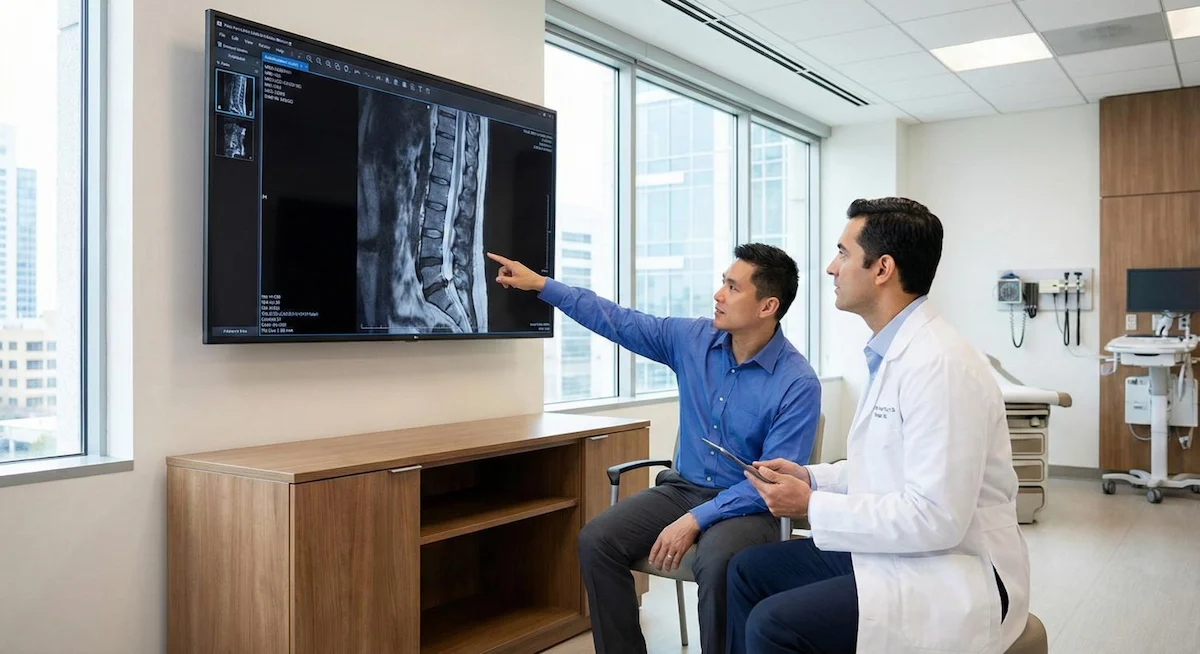
A herniated disc occurs when material from an intervertebral disc extends beyond its usual boundary. It can irritate nearby nerves and cause back or neck pain, pain that travels into an arm or leg, tingling, numbness, or weakness. Some herniations cause few or no symptoms.
Recovery depends on more than the scan result. The location of the herniation, the symptoms it causes, and changes in strength and daily function all matter.
What Improvement Can You Expect in the First 2 Weeks?
Some people begin to notice less pain during the first two weeks, while others experience little change. Symptoms may fluctuate from day to day, so a slow start does not automatically mean recovery will be prolonged.
There is no specific improvement that everyone should experience by day 14. Pay attention to the overall pattern, including pain intensity, sleep, mobility, and your ability to manage daily activities.
What Usually Changes Between Weeks 2 and 6?
Pain and movement tolerance may gradually improve over this period. Sitting, walking, sleeping, or returning to ordinary tasks may become easier, although progress is not always steady.
Cleveland Clinic notes that herniated discs often improve on their own within four to six weeks. If symptoms are not improving, are limiting everyday activities, or are getting worse, a healthcare professional can assess whether further evaluation is appropriate.
What If Recovery Takes 6 to 12 Weeks or Longer?
Recovery lasting longer than six weeks does not necessarily mean that treatment has failed or that surgery is required. StatPearls reports that more than 85% of symptoms from acute herniated discs resolve within 8 to 12 weeks with conservative management. This is a population-level estimate, not a prediction for every individual.
A clinical reassessment is appropriate if improvement stalls, symptoms interfere with daily life, or pain continues to radiate into an arm or leg. New or worsening weakness or other significant neurological changes need prompt assessment.
Herniated Disc Recovery Timeline
| Recovery stage | General expectation | What to keep in mind |
|---|---|---|
| Early improvement | Some symptoms may begin to ease within 2–6 weeks | Progress varies; not everyone improves at the same pace. |
| Broader symptom recovery | Many people improve substantially within 6–12 weeks | Some pain or activity limitations may persist. |
| Nerve-related symptoms | May improve over weeks or take months | Pain, tingling, numbness, and weakness can follow different timelines. |
| Changes in the disc itself | May take months or vary considerably | Structural changes do not necessarily occur at the same pace as symptom relief. |
| Persistent or worsening symptoms | No single waiting period is appropriate for everyone | Seek assessment if symptoms worsen, function declines, or recovery stalls. |
These timeframes are general estimates drawn from clinical references. They are not guaranteed milestones, and symptom improvement does not prove that the disc or affected nerve has fully recovered.
Does a Herniated Disc Heal Completely or Just Stop Hurting?
Symptoms can improve even when a herniated disc remains visible on an imaging scan. In some cases, the herniated material also shrinks over time. Pain relief, functional recovery, and structural changes are related but distinct outcomes.
- Symptom recovery: Pain, tingling, or other symptoms become less intense or frequent.
- Functional recovery: Movement, sleep, work, and daily activities become easier.
- Structural change: The herniated material decreases in size, sometimes through a process called disc resorption.
- Persistent imaging findings: A scan may continue to show disc changes even when symptoms have improved.
A 2015 systematic review of lumbar disc herniations reported different rates of spontaneous regression according to the type of herniation. The reported rates were 96% for sequestrated discs, 70% for extrusions, 41% for protrusions, and 13% for bulging discs. These figures came from a limited group of studies and should not be interpreted as an individual prognosis.
The distinction between a bulging disc and a herniated disc is not simply that one is always mild and the other severe. These terms describe different disc shapes or patterns of displacement. Their clinical significance depends on the overall findings and whether the disc is associated with symptoms or nerve involvement.
Imaging findings also need to be interpreted in context. Disc changes can appear in people who have no back pain, so a scan alone cannot reliably predict how much pain someone will experience or how long recovery will take.
Does Recovery Time Depend on Where the Disc Is Herniated?
Yes. A herniated disc in the lower back and one in the neck can affect different nerves and produce different symptoms. Recovery expectations depend on the location, clinical findings, and whether nerve function is affected.
How Long Does a Herniated Disc in the Lower Back Take to Heal?
Many symptomatic lumbar disc herniations improve over several weeks, and substantial improvement often occurs within 6 to 12 weeks. However, pain that travels into the buttock or leg, along with tingling or numbness, may not improve at the same rate as back pain.
When a lumbar disc irritates a nerve root, it can cause symptoms commonly associated with sciatica. For more detail about that separate issue, read our guide to how long sciatica can last without treatment.
How Long Does a Herniated Disc in the Neck Take to Heal?
Cervical disc recovery varies according to pain, nerve involvement, and clinical findings. A systematic review of cervical disc herniation with radiculopathy found that substantial improvement often occurred within the first 4 to 6 months. The review also reported that complete recovery could take longer for some patients.
The evidence base was limited, so these findings should be interpreted cautiously. Persistent symptoms, changes in arm or hand strength, or problems with coordination should be evaluated by a healthcare professional.
Why Does Herniated Disc Recovery Take Longer for Some People?
There is no single factor that determines recovery time. The location and extent of the herniation, the symptoms it causes, and a person’s overall clinical picture can all influence the course of recovery.
Does Nerve Compression Affect Recovery Time?
It can. Irritation or compression of a nerve may cause pain that travels into an arm or leg, tingling, numbness, or weakness. These symptoms may improve at a different rate from the pain in the neck or back.
Persistent or worsening weakness deserves particular attention. Pain becoming less intense does not necessarily mean that nerve function has fully recovered.
Can the Severity of a Herniation Delay Recovery?
The size or appearance of a herniation alone does not tell the whole story. Its location, the structures affected, neurological findings, and the symptoms it produces all matter.
Some larger herniations shrink over time, while a smaller disc change can still be associated with significant symptoms. A healthcare professional can interpret imaging findings alongside a physical examination and symptom history.
How Can Overall Health and Daily Activities Affect Recovery?
Recovery also depends on individual circumstances, activity tolerance, and the care plan recommended for the person’s symptoms. A movement or activity that feels manageable for one person may aggravate another person’s symptoms.
Avoid assuming that every flare means the disc has become structurally worse. At the same time, do not ignore symptoms that are severe, persistent, or accompanied by new neurological changes. Follow individualized medical guidance about activity and return to normal routines.
For more specific guidance on activity, read our article about exercising with a herniated disc.
How Can You Tell If a Herniated Disc Is Healing?
Improvement is often reflected in changes in symptoms and everyday function rather than a single milestone. Possible signs include:
- Pain becoming less intense or less frequent.
- Greater comfort with ordinary movement.
- Better sleep or improved ability to complete daily tasks.
- Reduced pain that travels into an arm or leg.
- Gradually improved activity tolerance.
Recovery can include temporary fluctuations, so consider the overall trend rather than judging progress by one difficult day. However, pain relief alone does not confirm that nerve function has returned to normal.
If numbness, tingling, or weakness persists, or if symptoms worsen, seek clinical advice. Our guide to herniated disc symptoms and warning signs explains symptoms that may warrant further evaluation.
What Should You Do If Your Herniated Disc Is Not Improving?
Arrange a medical assessment if symptoms are not improving, continue to interfere with daily life, or get worse. Do not rely on a fixed recovery timeline if your symptoms are changing or your function is declining.
A healthcare professional may review your symptom history and assess strength, reflexes, sensation, and movement. Imaging may be considered when symptoms persist, the examination suggests a significant neurological problem, or there is concern about another underlying condition.
Treatment depends on the individual. Some people improve with conservative care, while others may need additional evaluation or different treatment options. No single approach is suitable for everyone.
If you need further information about disc herniation treatment options, our disc injury page explains the clinic’s services. For persistent or recurring pain affecting daily activities, see our overview of pain management options in Vacaville.
When Is Herniated Disc Pain a Medical Emergency?
Do not wait for a typical recovery window if you develop symptoms that may indicate serious nerve compression.
Seek emergency medical care immediately if you experience:
- New loss of bladder or bowel control, or new difficulty urinating.
- Numbness around the groin, inner thighs, or saddle area.
- Severe or rapidly worsening weakness in a leg or arm.
- Other sudden, severe neurological changes.
These symptoms can indicate a serious problem, including cauda equina syndrome in some cases of lower-spine nerve compression. Prompt assessment is important because delays can lead to lasting neurological harm.
Frequently Asked Questions About Herniated Disc Recovery
This article is for educational purposes only and does not replace individualized medical advice, diagnosis, or treatment. Recovery timelines are general estimates and are not guarantees. Consult a qualified healthcare professional about symptoms and appropriate care.