
The most common causes of nerve pain throughout the body include:
- Peripheral neuropathy
- Diabetes
- Vitamin deficiencies
- Autoimmune diseases
- Infections
- Medication side effects
- Thyroid disorders
- Kidney disease
- Nerve compression
If you feel burning, tingling, or numbness in more than one area of your body - you are not alone. This kind of widespread nerve pain is a common reason patients search for answers before they ever set foot in a clinic.
This guide walks through what nerve pain is and the most common causes behind it. It also covers the risk factors that raise your odds, plus when it is time to have your symptoms evaluated by a professional.
Key Takeaways
- Widespread nerve pain is often a sign of a systemic issue, not just a local injury.
- Common causes include diabetes, vitamin deficiencies, autoimmune diseases, and infections.
- Risk factors like aging, obesity, and poor nutrition can increase your likelihood.
- Persistent or worsening symptoms should be evaluated to identify the underlying cause.
What Is Nerve Pain?
What is nerve pain, exactly?
Nerve pain, also called neuropathic pain, happens when nerves are damaged, irritated, or not sending signals correctly. Instead of a normal pain response to injury, the nervous system itself becomes the source of the discomfort.
Your nervous system relies on three main types of peripheral nerves. Each one carries a different kind of signal, and damage to any of them can produce different symptoms.
- Sensory nerves carry information about touch, temperature, and pain from the skin back to the brain
- Motor nerves send signals from the brain to the muscles, controlling movement and strength
- Autonomic nerves regulate involuntary functions like heart rate, digestion, and blood pressure
When one or more of these nerve types is affected, the result can be pain or weakness. Changes in body function can also show up, often in more than one part of the body at once.
What Does Widespread Nerve Pain Feel Like?
What does nerve pain throughout the body feel like?
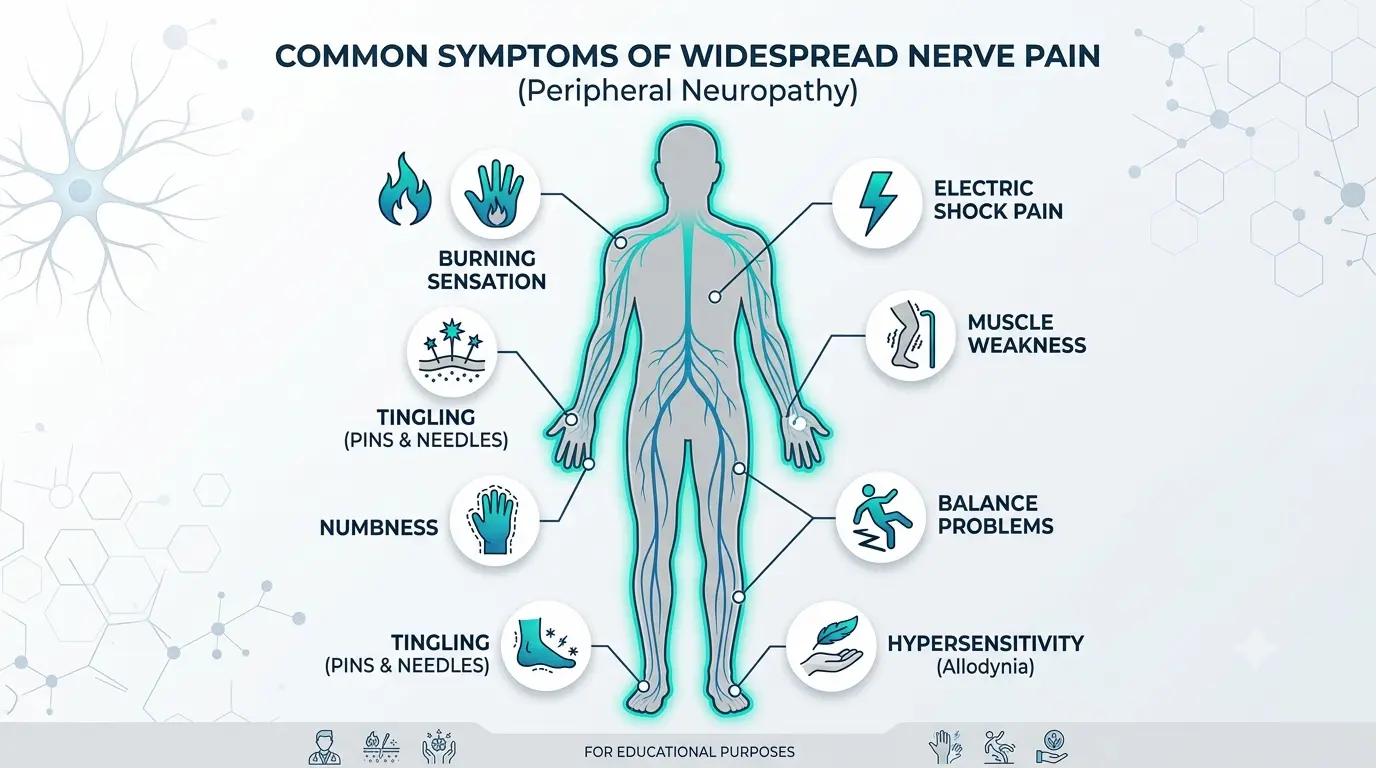
Widespread nerve pain often feels like burning, tingling, numbness, or electric shock sensations. Some people also notice stabbing pain, unusual sensitivity to touch, muscle weakness, or trouble with balance.
Nerve pain rarely feels the same from one person to the next. Common descriptions include:
- A burning sensation, often in the hands or feet
- Tingling or a "pins and needles" feeling
- Numbness that spreads or moves between areas
- Electric shock or stabbing sensations
- Hypersensitivity, where light touch feels painful
- Muscle weakness in the arms or legs
- Balance problems or a feeling of unsteadiness
These sensations often appear in the hands and feet first. They can also spread to the arms, legs, or torso. That spread is why patients often describe the pain as unpredictable.
Common Causes of Nerve Pain Throughout the Body
Widespread nerve pain usually points to a systemic issue rather than a single injury. Below are the most common contributing causes.
| Cause | Common Symptoms | Can It Be Reversed? | Higher Risk In |
|---|---|---|---|
| Diabetes | Burning, tingling, numbness | Partially with control | People with diabetes |
| Vitamin B12 deficiency | Numbness, weakness, balance problems | Often reversible | Older adults, restrictive diets |
| Autoimmune diseases | Pain, tingling, weakness | Variable | Lupus, rheumatoid arthritis, multiple sclerosis |
| Nerve compression | Radiating pain, numbness | Often reversible | Herniated discs, spinal stenosis |
| Fibromyalgia | Widespread pain, tenderness | Manageable | Adults, especially women |
Peripheral Neuropathy
Peripheral neuropathy is damage to the nerves outside the brain and spinal cord. It is one of the most frequent causes of widespread burning nerve pain, tingling, and numbness. It can also result from many of the conditions covered below.
Learn more about the signs and symptoms of neuropathy on our in-depth page.
Diabetes
Diabetes is one of the leading causes of peripheral neuropathy. Diabetic neuropathy develops when prolonged high blood sugar damages small nerve fibers, most often starting in the feet and hands. It tends to progress slowly, which is why early symptoms like mild tingling are easy to dismiss.
Vitamin Deficiencies
Nerves depend on specific nutrients to function properly. Deficiencies in vitamin B12, vitamin B6, and vitamin E have all been linked to nerve damage and widespread nerve damage symptoms.
Autoimmune Diseases
Conditions such as lupus, rheumatoid arthritis, and multiple sclerosis cause the immune system to mistakenly attack healthy tissue. Nerve fibers are often part of that damage, which can produce nerve pain in multiple areas at once.
Infections
Certain infections can damage nerves directly or trigger inflammation that affects nerve function. Shingles, Lyme disease, and HIV are among the most commonly identified infectious causes.
Medication Side Effects
Some medications list nerve pain or numbness as a possible side effect. If nerve symptoms began after starting a new prescription, that timing is worth mentioning to a healthcare provider.
Chemotherapy-Induced Neuropathy
Certain chemotherapy drugs used to treat cancer can damage peripheral nerves, leading to tingling, numbness, and burning pain in the hands and feet. This form of neuropathy may improve after treatment ends, but in some cases, symptoms can persist.
Alcohol Misuse
Long-term heavy alcohol use can damage peripheral nerves directly and interferes with the body's ability to absorb nutrients that nerves need to stay healthy.
Toxin Exposure
Exposure to heavy metals or industrial chemicals over time can damage nerve tissue. This is less common than the causes above but worth ruling out in certain occupational settings.
Chronic Kidney Disease
When kidneys are not filtering waste effectively, toxins can build up in the bloodstream and affect nerve function throughout the body, a condition sometimes called uremic neuropathy.
Thyroid Disorders
Hypothyroidism, an underactive thyroid, has been linked to nerve compression and peripheral nerve damage. Addressing the underlying thyroid imbalance is often part of managing the nerve symptoms.
Nerve Compression
Structural issues such as spinal stenosis, herniated discs, or sciatica can compress nerve roots and cause pain that radiates well beyond the original site of compression.
Fibromyalgia
Fibromyalgia causes widespread pain and tenderness that can overlap significantly with nerve pain symptoms, even though the underlying mechanism is different from classic nerve damage.
Idiopathic Neuropathy
In some cases, a clear cause is never identified even after thorough testing. This is called idiopathic neuropathy, and it still benefits from the same symptom management and monitoring approach.
Risk Factors for Widespread Nerve Pain
Who is most at risk for widespread nerve pain?
People with diabetes, obesity, a family history of neuropathy, or a history of smoking and alcohol use face a higher risk. Aging and poor nutrition also increase the likelihood of developing body-wide nerve pain.
- Aging
- Diabetes
- Obesity
- Smoking
- Alcohol use
- Family history of neuropathy
- Autoimmune disease
- Poor nutrition
When Should You See a Healthcare Provider?
When should I worry about nerve pain?
You should see a healthcare provider if nerve pain is worsening, spreading, or accompanied by weakness, falls, or a loss of sensation. Sudden-onset symptoms deserve prompt evaluation rather than a wait-and-see approach.
Widespread nerve pain is a signal from your body that something needs attention. Watch for these warning signs:
- Symptoms that are worsening over time
- New or increasing muscle weakness
- Falls or a noticeable loss of balance
- Loss of sensation in the hands or feet
- Symptoms that persist for weeks without improvement
- Sudden onset of pain, numbness, or weakness
A proper evaluation is the only way to identify the specific cause behind your symptoms. Our Neuropathy Signs and Symptoms page walks through what our team looks for during that process.
How Is Widespread Nerve Pain Diagnosed?
How do doctors diagnose widespread nerve pain?
Diagnosis typically starts with a medical history and neurological exam, followed by blood work and sometimes nerve conduction studies or EMG testing. Imaging may be used if a structural cause like disc compression is suspected.
A thorough diagnostic workup usually includes several of the following steps, though the exact combination depends on your symptoms.
- A detailed medical history
- A hands-on neurological examination
- Blood work to check for deficiencies, diabetes, or autoimmune markers
- Imaging, when a structural cause is suspected
- Nerve conduction studies to measure how well signals travel
- Electromyography (EMG) to assess muscle response to nerve signals
Can Nerve Pain Be Prevented?
Can nerve pain be prevented?
Some causes of nerve pain can be reduced through lifestyle habits and by managing chronic medical conditions. A balanced diet, regular exercise, blood sugar management, and limiting alcohol and tobacco use all support long-term nerve health.
- Eating a nutrient-dense, balanced diet
- Staying physically active
- Managing blood sugar if you have diabetes or prediabetes
- Limiting alcohol intake
- Quitting smoking
- Maintaining a healthy body weight
- Getting adequate vitamin intake, particularly B12
- Properly managing chronic conditions like thyroid disorders or kidney disease
Prevention lowers your risk, but it cannot rule out every possible cause. Persistent or unexplained nerve pain still deserves a proper evaluation rather than guesswork. Our Neuropathy Signs and Symptoms page outlines the non-surgical, integrative approach our Vacaville team uses to get to the root of nerve symptoms for patients throughout Solano County, including Fairfield and Dixon.
Structural conditions such as sciatica, lower back pain, and neck pain can place pressure on nerves and contribute to nerve pain symptoms. Because nerve pain can have many possible causes, a professional evaluation is important to identify the underlying source before deciding on the most appropriate course of care.
Struggling with unexplained nerve pain that affects your daily life?
Our team can help identify the root cause and build a comprehensive care plan to reduce your symptoms.
Schedule a Neuropathy Evaluation →Frequently Asked Questions
References
Authoritative Sources
1. National Institute of Neurological Disorders and Stroke. Peripheral Neuropathy Fact Sheet. ninds.nih.gov
2. American Academy of Neurology. Position Statement: Painful Peripheral Neuropathy. aan.com/Guidelines
3. National Institute of Diabetes and Digestive and Kidney Diseases. Diabetic Neuropathy. niddk.nih.gov
4. Mayo Clinic. Peripheral neuropathy: Symptoms and causes. mayoclinic.org
Final Thoughts
Nerve pain throughout the body can result from many different conditions, including peripheral neuropathy, diabetes, vitamin deficiencies, autoimmune diseases, and nerve compression. Because symptoms often overlap, identifying the underlying cause is the first step toward appropriate care. If you're experiencing persistent, worsening, or unexplained nerve pain, visit our Neuropathy Signs and Symptoms page to learn more about our approach to evaluation and care in Vacaville.
This content has been reviewed by our medical team and is intended for educational purposes only. It should not be used as a substitute for professional medical advice, diagnosis, or treatment.