Reviewed by: Dr. Alex Tam, DC
Photobiomodulation (PBM) is a light-based process in which red or near-infrared light interacts with molecules in cells and may influence biological activity. Researchers are studying its potential effects on mitochondrial function, cellular signaling, oxidative processes, and inflammation.
Results depend on factors such as wavelength, light dose, treatment parameters, and the tissue being studied. Research suggests possible benefits for certain conditions, but proposed biological mechanisms do not automatically prove clinical effectiveness. PBM is not a universal treatment, and its benefits and limitations must be evaluated using condition-specific evidence.
This guide explains how researchers think photobiomodulation works, why wavelength and light dose matter, and what current studies can—and cannot—show. It is educational and does not provide a treatment protocol.
What Is Photobiomodulation in Simple Terms?
Photobiomodulation is the use of low levels of light to influence how cells behave. A 2025 review in the Journal of Translational Medicine describes PBM as a process involving non-ionizing light, typically within the 600–1100 nanometer (nm) range, that interacts with light-sensitive molecules in biological tissue.
The term describes a physical process, not a guaranteed health outcome. It replaced older terms such as low-level laser therapy and low-level light therapy.
Is Photobiomodulation the Same as Red Light Therapy?
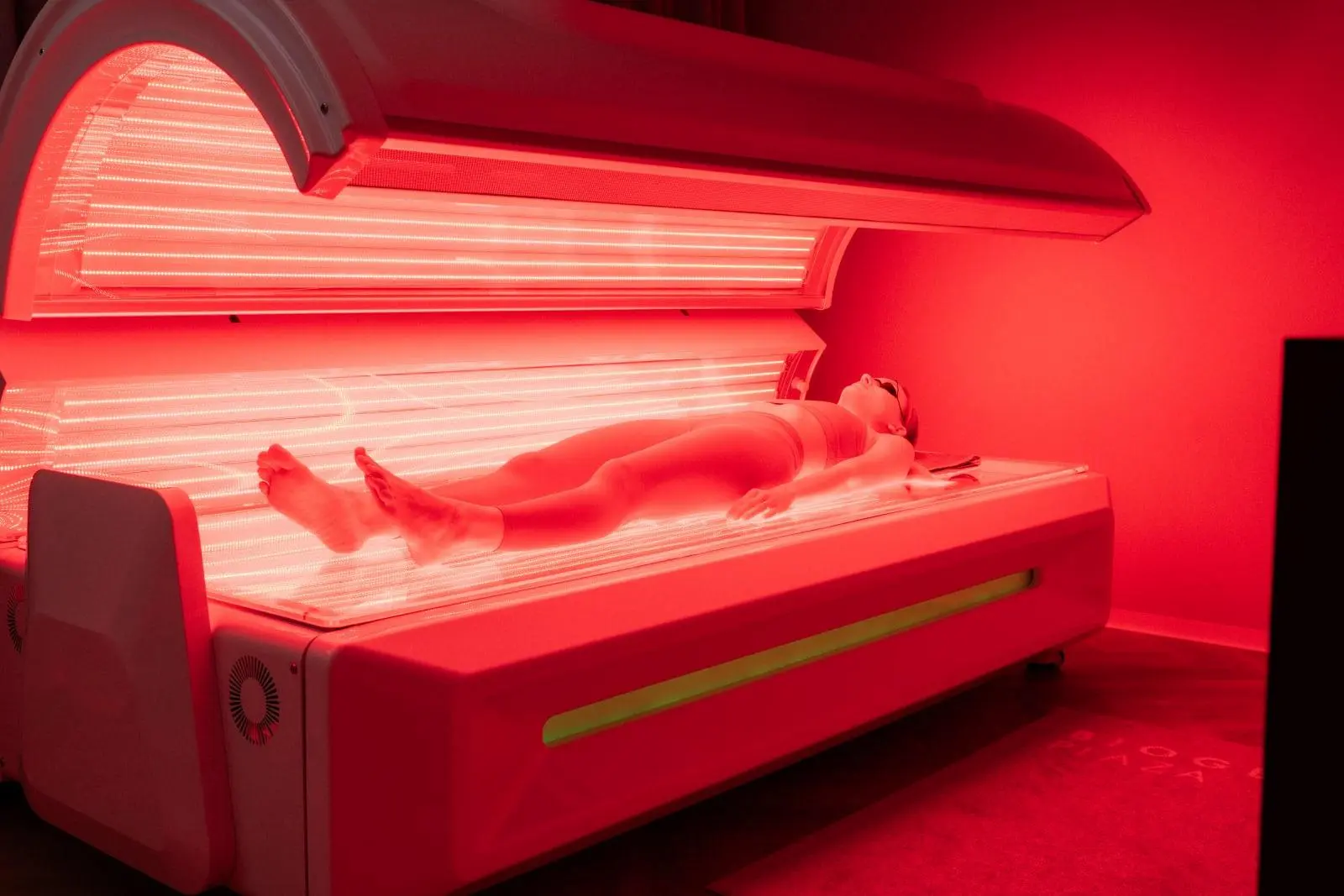
Not exactly. Photobiomodulation is the scientific term for the process of using light to influence biological activity. Red light therapy is a common consumer term for treatments that use red light and sometimes near-infrared light.
Research has used lasers and light-emitting diodes (LEDs) with different wavelengths and settings. A product labeled red light therapy may not use the same parameters as a device studied in a clinical trial.
How Does Photobiomodulation Differ From Photodynamic Therapy?
Photodynamic therapy generally combines light with a light-activated substance called a photosensitizer. The combination is designed to produce a reaction that damages targeted cells.
Photobiomodulation does not rely on an added photosensitizing drug. Its proposed purpose is to influence cellular activity and signaling rather than intentionally destroy targeted cells. The two approaches use light but have different mechanisms and clinical purposes.
How Does Photobiomodulation Work Inside the Body?
The leading explanation is that cells absorb red or near-infrared light through molecules called photoacceptors. This absorption may influence cellular signaling and processes involved in energy production.
One frequently studied candidate is cytochrome c oxidase, an enzyme involved in mitochondrial respiration. However, the complete mechanism of photobiomodulation remains under investigation. A review by Hamblin and colleagues discusses evidence supporting this pathway, while other researchers have questioned whether cytochrome c oxidase is established as the primary light-absorbing target in all PBM responses.
These mechanisms should therefore be understood as scientific hypotheses, not settled explanations.
How Do Cells Absorb Red and Near-Infrared Light?
Light must be absorbed before it can produce a biological effect. Molecules that absorb light are known as photoacceptors.
Cytochrome c oxidase, an enzyme in the mitochondrial respiratory chain, is one of the best-studied candidates. Researchers have proposed that light absorption by this enzyme may affect oxygen use and cellular energy processes.
Other possible pathways include light-sensitive ion channels and signaling molecules. The relative importance of these pathways may vary depending on the wavelength, dose, tissue, and experimental conditions.
What Role Do Mitochondria Play in Photobiomodulation?
Mitochondria are structures inside cells that help produce adenosine triphosphate (ATP), the molecule cells use to store and transfer energy.
Cytochrome c oxidase is one component of the mitochondrial respiratory chain. Researchers propose that light exposure may influence its activity and, in turn, affect oxygen use and energy-related processes. These proposed effects are part of the broader research into mitochondrial health and cellular energy.
What Are ATP, Nitric Oxide, and Reactive Oxygen Species?
Three molecules frequently appear in scientific explanations of photobiomodulation:
- Adenosine triphosphate (ATP): The molecule cells use to store and transfer energy. Increased ATP has been reported in some PBM experiments, but it is not an established response to every wavelength, dose, or treatment protocol.
- Nitric oxide (NO): A signaling molecule that can bind to cytochrome c oxidase and compete with oxygen. One hypothesis proposes that light may release bound nitric oxide, potentially changing cellular respiration. This mechanism remains under investigation.
- Reactive oxygen species (ROS): Reactive molecules produced during normal cellular processes. At controlled levels, they can participate in cell signaling. At excessive levels, they can contribute to cellular damage.
These molecules are involved in several proposed explanations of how light exposure may influence cellular activity.
How Might Light Exposure Affect Cellular Signaling?
Researchers propose that changes in reactive oxygen species, calcium levels, and other signaling molecules may affect communication between cellular structures and the nucleus.
These signals could influence transcription factors such as NF-κB and CREB, which help regulate gene activity. Some studies have also reported changes in inflammatory markers, including TNF-α and IL-6.
However, findings from laboratory studies do not automatically establish that the same effects occur in patients or lead to meaningful improvements in symptoms.
Why Do Wavelength and Light Dose Matter?
Wavelength and dose matter because biological tissues absorb and transmit different wavelengths differently. Cells may also respond differently depending on how much light reaches the treatment area.
Two studies that both describe their intervention as red light therapy may therefore deliver substantially different exposures.
How Do Red and Near-Infrared Wavelengths Differ?
Red light is commonly described as falling within approximately 620–700 nm, although wavelength classifications can vary across scientific sources. Near-infrared light begins around 700 nm and extends into longer wavelengths; the upper boundary used in PBM research also varies.
Near-infrared light is generally considered capable of reaching deeper tissue than visible red light. Actual penetration depends on wavelength, tissue composition, skin characteristics, and other factors. Greater penetration does not automatically mean a better clinical result.
What Do Irradiance and Fluence Mean?
Two measurements help describe the amount of light delivered:
- Irradiance: The amount of optical power reaching a given area, commonly measured in milliwatts per square centimeter (mW/cm²).
- Fluence: The total energy delivered to that area, commonly measured in joules per square centimeter (J/cm²).
Fluence is calculated from irradiance multiplied by exposure time, assuming the irradiance remains constant.
A 2025 review reported irradiance values of approximately 15–175 mW/cm² and doses of approximately 3–60 J/cm² across the studies it examined. These figures describe a range used in research, not a recommended treatment dose. A setting used in one study cannot automatically be applied to another device, body area, or condition.
Why Can Too Little or Too Much Light Affect Results?
A pattern known as the biphasic dose response has been reported in photobiomodulation research. It means that the biological response may depend on the amount of light delivered.
In some experiments, lower light doses produce a measurable response while higher doses produce a smaller response or no response. Too little light may not produce a detectable effect, while excessive exposure may reduce or change the response.
This is one reason why more light or longer exposure should not automatically be assumed to produce better results.
Why Do Photobiomodulation Studies Use Different Protocols?
Research protocols vary in several ways, including:
- Wavelength
- Irradiance and fluence
- Exposure time
- Continuous or pulsed light delivery
- Treatment location
- Frequency and duration of sessions
- Type of light source
The 2025 review by Shivappa and colleagues notes that there is no internationally harmonized PBM protocol standard. Hamblin and colleagues have also highlighted inconsistent reporting of treatment parameters in published studies.
These differences make it difficult to compare trials directly or apply one study's results to a different device or condition.
What Does Research Say About Photobiomodulation?
Research suggests possible benefits for some health outcomes, while other outcomes have not shown clear effects. The strength of evidence varies by condition, and many findings remain uncertain.
A 2025 umbrella review by Son and colleagues examined 15 meta-analyses covering 204 randomized controlled trials and more than 9,000 participants. The review assessed 35 health endpoints across 15 conditions.
The authors reported statistically significant effects for 12 of the 35 endpoints. The other 23 did not show statistically significant effects in the analyses. A non-significant finding does not prove that PBM has no effect; it means the available evidence did not demonstrate a statistically significant difference for that outcome.
The certainty of evidence was limited:
- No endpoints reached high certainty.
- Six endpoints were rated moderate certainty.
- Twenty were rated low certainty.
- Nine were rated very low certainty.
The authors described PBM as a potentially promising non-invasive adjunctive approach but called for larger clinical trials and more standardized protocols.
What Does Research Suggest About Pain and Inflammation?
Laboratory studies have reported changes in inflammatory molecules after light exposure. Clinical findings related to pain, however, are mixed and depend on the condition and treatment parameters.
Pain scores, physical function, and inflammatory biomarkers are different outcomes. A reduction in reported pain does not automatically demonstrate that inflammation has decreased or that tissue damage has been repaired.
The evidence should be evaluated separately for each condition. For a condition-specific discussion, see our article on whether red light therapy may help neuropathy.
What Evidence Exists for Wound Healing and Tissue Repair?
Laboratory and animal studies have reported changes in biological signals associated with tissue repair, including vascular endothelial growth factor (VEGF) and hypoxia-inducible factor 1-alpha (HIF-1α).
Researchers have also investigated whether PBM may influence immune-cell activity during healing. These findings help explain why tissue repair is being studied, but they do not establish that PBM improves every type of wound or injury in clinical practice.
Clinical evidence must be evaluated according to the wound type, treatment parameters, study design, and measured outcomes.
What Has Research Found About Skin-Related Outcomes?
Studies of skin-related outcomes have examined measures such as skin texture, appearance, and recovery following certain types of skin injury.
Results from one skin condition or treatment protocol cannot automatically be applied to other cosmetic concerns, wounds, or deeper tissues. Each outcome requires its own clinical evidence.
Why Do Results Differ Across Conditions and Studies?
The 2025 umbrella review found very high statistical heterogeneity (I² above 75%) in 15 of the 35 endpoints it assessed.
High heterogeneity means that the results of the studies being combined varied considerably. Differences in participant characteristics, treatment settings, light sources, wavelengths, doses, and outcome measurements may contribute to these variations.
This makes broad claims about PBM less reliable than condition-specific conclusions.
What Does Research Tell Us About Photobiomodulation Across Different Conditions?
| Condition or outcome | What studies may measure | Research timeframe | Evidence caveat |
|---|---|---|---|
| Acute pain or exercise-related soreness | Pain scores, soreness, and physical function | No universal timeframe established | Findings from one setting cannot be generalized to every acute injury |
| Chronic joint pain | Pain, stiffness, and physical function | No universal timeframe established | Results depend on diagnosis, protocol, and certainty of evidence |
| Inflammation-related outcomes | Biomarkers, swelling, and symptoms | No universal timeframe established | Symptom improvement does not automatically prove reduced inflammation |
| Skin recovery and appearance | Skin texture, wrinkles, and measured skin properties | No universal timeframe established | Cosmetic outcomes do not establish wound healing or deeper tissue repair |
| Wound and tissue repair | Wound closure, healing measures, and tissue outcomes | No universal timeframe established | Evidence for one tissue or wound type does not establish benefit for all injuries |
Sources: Son et al. (2025) and Shivappa et al. (2025). These categories summarize areas of research, not established treatment indications or expected results. Research timeframes describe when outcomes were measured in individual studies, not guaranteed treatment timelines.
What Are the Limitations of Photobiomodulation?
The main limitations include inconsistent treatment protocols, small or underpowered trials, differences between study designs, and uncertainty about how laboratory findings translate into patient outcomes.
A biological mechanism that appears promising in a cell experiment does not, by itself, establish that a treatment improves a patient's health. Clinical effectiveness must be demonstrated through appropriately designed studies that measure meaningful outcomes.
The 2025 review by Shivappa and colleagues also notes that consumer-grade devices have expanded faster than the available validation for many products and uses.
Why Can Laboratory Findings Differ From Patient Outcomes?
Laboratory studies often use controlled conditions, cultured cells, or animal models. Human studies involve more variables, including differences in health, tissue characteristics, treatment adherence, and other therapies.
A response observed in a laboratory may not occur at the same level in a person. Hamblin and colleagues discuss how several proposed PBM pathways are supported by preclinical findings, while clinical trials have produced mixed or inconclusive results.
What Does the Biphasic Dose Response Mean?
The biphasic dose response means that increasing the amount of light does not necessarily increase the biological response.
A dose that produces an effect in one experiment may be ineffective or produce a different response in another. This reinforces the importance of studying specific wavelengths, doses, devices, and conditions rather than assuming that one protocol applies universally.
Why Can't One Study Establish Effectiveness for Every Condition?
Different conditions have different biological processes, treatment goals, and appropriate outcome measurements. A study may also report a statistically significant result that is too small to be meaningful to patients.
The 2025 umbrella review found significant effects for 12 of 35 endpoints, with no endpoint reaching high certainty. These findings demonstrate why evidence must be assessed separately for each condition and outcome.
Is Photobiomodulation Safe for Everyone?
Photobiomodulation should not be described as universally safe. Safety depends on the device, its settings, the treatment area, the person's circumstances, and the instructions provided by the manufacturer.
The 2025 umbrella review also noted that the meta-analyses it evaluated did not assess adverse outcomes. This limits what can be concluded about safety from that review and highlights the need for adverse-event reporting in clinical research.
What Safety Precautions Matter With Light-Based Treatments?
Follow the manufacturer's instructions for the specific device, including guidance on exposure time, distance, treatment areas, and protective equipment.
Eye protection is particularly important when recommended by the device manufacturer or required by the treatment setup. Do not look directly into bright light sources. Stop using the device and seek appropriate advice if you experience unexpected irritation, burning, or new symptoms.
Precautions can differ between devices. Instructions for one product should not be assumed to apply to another.
When Should Someone Ask a Healthcare Professional Before Use?
A healthcare professional should review whether light-based treatment is appropriate when a person:
- Is pregnant or may be pregnant.
- Has a current or previous cancer diagnosis.
- Has an unexplained or unevaluated skin lesion in the proposed treatment area.
- Takes medication or has a condition that may increase sensitivity to light.
- Has an eye condition that could affect treatment safety.
- Has unexplained pain, worsening symptoms, or a condition that has not been evaluated.
These are reasons to seek individualized guidance, not universal contraindications for every PBM device. The appropriate precautions depend on the person's circumstances and the manufacturer's device-specific instructions.
Does FDA Clearance Show That a Device Works?
No. FDA clearance and proof of effectiveness are not interchangeable.
For a 510(k) clearance, the FDA determines whether a device is substantially equivalent to a legally marketed predicate device for its stated intended use. Clearance does not establish that a device is effective for every condition or every use promoted in advertising.
For example, an FDA 510(k) clearance letter for one LED device lists specific light colors and intended uses. That document applies to that device; it is not evidence for other products or for the clinic's equipment.
Our guide on what FDA approval and registration mean for red light therapy explains the distinction in more detail.
How Is Photobiomodulation Studied in Clinical Practice?
Researchers commonly evaluate PBM through randomized controlled trials. Participants may receive active light treatment or a sham treatment, and researchers compare outcomes using measurements such as pain scales, physical-function tests, or other condition-specific assessments.
Systematic reviews and meta-analyses then combine findings from multiple studies to estimate overall effects and evaluate the certainty of the evidence.
Clinical decisions should take into account the condition being addressed, the available research, the treatment parameters, and the individual's overall care needs.
Pain can have many possible causes. Photobiomodulation should be considered in the context of a person's symptoms, diagnosis, and broader care plan. Readers exploring conservative options can learn more about non-surgical pain management in Vacaville.
What Should Readers Remember About Photobiomodulation?
- Definition: Photobiomodulation uses red or near-infrared light to influence biological activity in cells.
- Mechanisms: Cytochrome c oxidase, nitric oxide, ATP, and reactive oxygen species are involved in proposed explanations, but the complete mechanism is not settled.
- Dose: Wavelength, irradiance, and fluence matter. More light does not necessarily produce a better response.
- Evidence: Research suggests possible benefits for certain outcomes, but findings are mixed and certainty is mostly low to moderate.
- Next step: Condition-specific evidence, device instructions, and individual evaluation matter more than broad claims about light therapy.
Frequently Asked Questions About Photobiomodulation
Learn More About Full-Body Red Light Therapy
To learn how light-based care is offered at Absolute Integrative Physical Medicine, visit our page about full-body red light therapy.
This article is for general educational purposes and is not a substitute for professional medical advice, diagnosis, or treatment. Read our healthcare disclaimer for more information.
This content has been reviewed by our healthcare professionals for accuracy and educational purposes. It should not be used as a substitute for professional medical advice, diagnosis, or treatment.
Medical References
de Freitas LF; Hamblin MR. Proposed mechanisms of photobiomodulation or low-level light therapy. IEEE Journal of Selected Topics in Quantum Electronics. 2016;22(3):7000417. Read the review.
Quirk BJ; Whelan HT. What lies at the heart of photobiomodulation: light, cytochrome c oxidase, and nitric oxide—review of the evidence. 2020. Read the review.
Huang YY; Chen AC; Carroll JD; Hamblin MR. Biphasic dose response in low level light therapy. Dose-Response. 2009;7. Read the paper.
Shivappa P; et al. From light to healing: photobiomodulation therapy in medical disciplines. Journal of Translational Medicine. 2025;23:1430. Read the review.
Son Y; Lee H; Yu S; et al. Effects of photobiomodulation on multiple health outcomes: an umbrella review of randomized clinical trials. Systematic Reviews. 2025;14:160. Read the review.
U.S. Food and Drug Administration. 510(k) clearance letter K241293, LED light therapy device, July 8, 2024. Read the FDA letter.