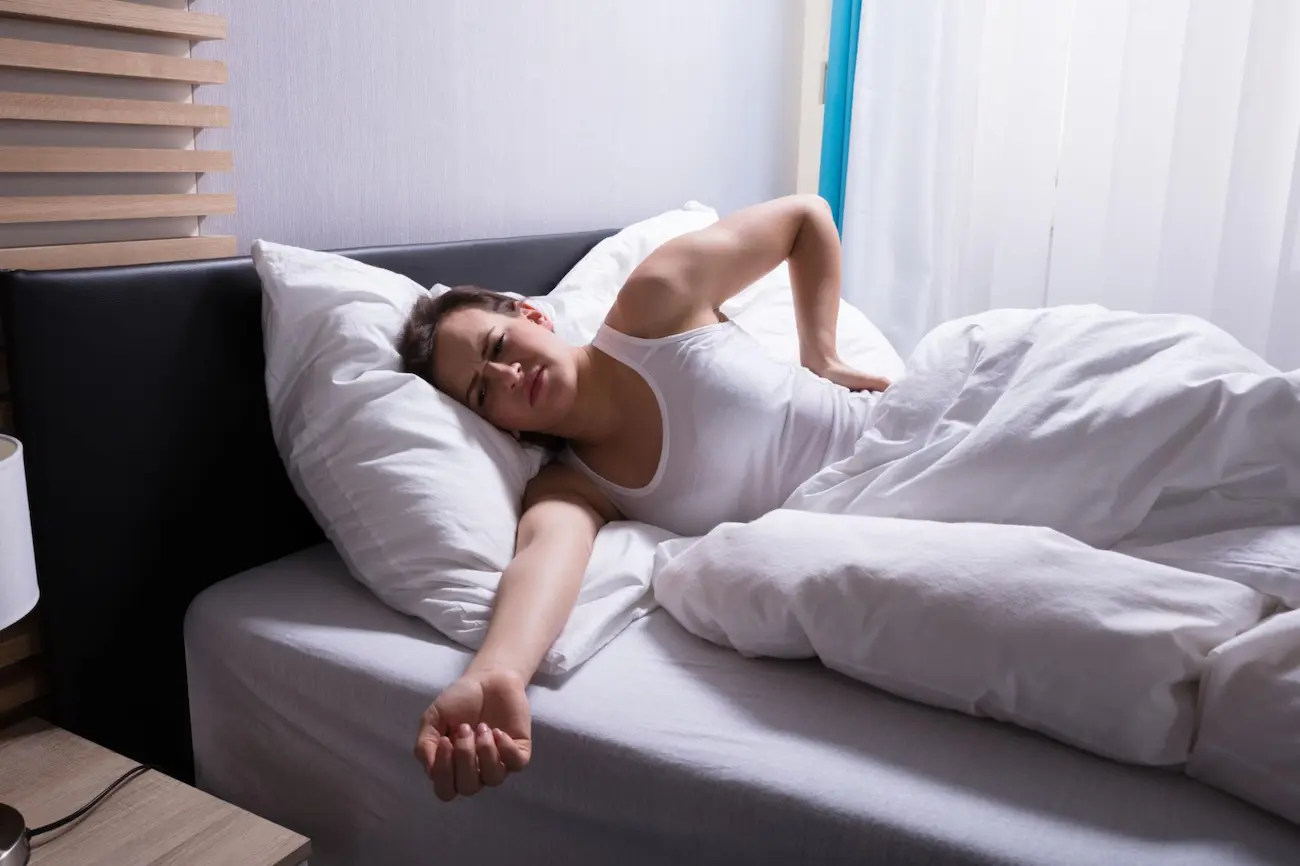
Sciatica can feel more intense at night because the body is usually still for longer periods, certain sleeping positions may increase pressure on irritated areas, and pain becomes easier to notice when there are fewer distractions. Nighttime sciatica pain does not always mean the condition is getting worse, but repeated sleep disruption may indicate that the underlying cause needs attention.
Many people with sciatica notice a pattern: they can manage symptoms during the day, but pain increases when they lie down or try to sleep. Understanding why this happens can help you make better decisions about sleep positioning, daily habits, and when to seek professional evaluation.
Key Takeaways
- Sciatica may feel worse at night because of inactivity, increased awareness of pain, and sleeping positions that affect nerve irritation.
- Sleeping position can affect spinal alignment and pressure around irritated nerves.
- Gentle movement before bed may help reduce stiffness for some people.
- Persistent nighttime pain, weakness, or worsening symptoms should be evaluated.
Table of Contents
Why Does Sciatica Feel Worse at Night?
Sciatica symptoms can become more noticeable at night for several reasons.
During the day, movement, work, and daily activities create distractions that may reduce how strongly pain signals are perceived. At night, when the body is resting and attention shifts toward physical sensations, nerve-related discomfort may feel more intense.
Reduced Movement During Sleep
The spine, hips, and surrounding muscles naturally move less while sleeping. Staying in one position for several hours may increase stiffness, especially when tissues around the lower back or sciatic nerve are already irritated.
Some people notice their symptoms are worse:
- After lying down for a long time
- When getting up after sleeping
- When changing positions during the night
Inflammation and Nerve Sensitivity
When a nerve becomes irritated, surrounding tissues may become more sensitive. At night, when there is less activity and movement, this sensitivity may become more noticeable.
However, nighttime pain does not always mean inflammation is the only cause. Sciatica symptoms can vary depending on whether the underlying issue involves:
- Disc irritation
- Nerve compression
- Muscle tension
- Joint restrictions
- Movement patterns
Understanding the underlying cause of your symptoms is an important part of finding the right approach. Learn more about sciatica treatment options and how different causes may affect symptoms.
Since sciatic nerve symptoms can sometimes be connected to lower back conditions, understanding available lower back pain treatment options may help identify the underlying cause.
Sleeping Position May Increase Pressure
The position you sleep in can influence spinal alignment and how pressure is distributed through the lower back, hips, and pelvis.
A position that feels comfortable for one person may increase symptoms for another.
Why Does Lying Down Make My Leg Hurt?
Lying down changes the way pressure is distributed through the lower back, pelvis, and surrounding tissues. For some people with sciatica, certain positions may increase tension around irritated nerves and make leg pain more noticeable.
Common Reasons Sciatica Gets Worse at Night
| Possible Trigger | Why It May Increase Symptoms | What May Help |
|---|---|---|
| Poor sleeping posture | May place additional stress on irritated areas | Adjust pillow support and spinal alignment |
| Staying still too long | Can increase stiffness and discomfort | Gentle movement before bed |
| Muscle tightness | Tight hips and glute muscles may contribute to discomfort | Light stretching if tolerated |
| Mattress support issues | Poor comfort or support may affect sleep posture | Evaluate mattress and pillow setup |
| Existing nerve irritation | Sensitive nerves may respond more strongly during rest | Address the underlying cause |
Does Sleeping Position Affect Sciatica?
Yes, sleeping position may influence how much pressure is placed on the lower back and surrounding structures.
There is no single "perfect" sleeping position for everyone with sciatica. The best position is usually the one that keeps your spine comfortable and does not increase leg pain, numbness, or tingling.
Side Sleeping With Sciatica
Many people find side sleeping more comfortable.
Helpful adjustments may include:
- Keeping knees slightly bent
- Placing a pillow between the knees
- Avoiding twisting the pelvis
This may help maintain better alignment between the hips and spine.
Back Sleeping With Sciatica
Sleeping on your back may be comfortable for some people.
A pillow under the knees may help reduce strain on the lower back by supporting a more relaxed spinal position.
Stomach Sleeping With Sciatica
Stomach sleeping may increase lower back rotation for some individuals.
If this position increases leg pain or numbness, another sleep position may be worth trying.
How Can I Sleep Better With Sciatica?
Improving nighttime comfort often involves reducing irritation before going to bed.
Gentle Movement Before Bed
Light movement may help reduce stiffness before a long period of rest.
Examples:
- Short walks
- Gentle mobility exercises
- Comfortable stretching
Avoid movements that increase shooting pain or numbness.
Avoid Long Periods of Sitting Before Sleep
Extended sitting can increase stress on the lower back and may aggravate sciatic symptoms. Learn more about how sitting can affect back pain and sciatica symptoms.
If you spend much of the day sitting:
- Take movement breaks
- Adjust your posture
- Avoid remaining seated for hours before bedtime
Use Heat or Ice Based on Your Symptoms
Some people find heat relaxing because it may help reduce muscle tightness.
Others prefer cold therapy when symptoms feel irritated.
The best option depends on the individual and the cause of symptoms.
When Nighttime Sciatica May Be a Sign of Something More Serious
While nighttime pain can happen with common cases of sciatica, certain symptoms require medical attention.
Seek prompt evaluation if you experience:
- Progressive leg weakness
- Loss of bladder or bowel control
- Numbness in the saddle area
- Severe worsening pain
- Difficulty walking
- Symptoms that continue to worsen despite self-care
Nighttime pain that repeatedly interrupts sleep may be a sign that the underlying cause needs a more complete evaluation.
When Should You Seek Professional Evaluation?
If sciatica continues affecting your sleep, work, mobility, or daily activities, identifying the source of nerve irritation is important.
Nighttime pain that repeatedly interrupts sleep may be a sign that the underlying cause needs a more complete evaluation.
A professional evaluation can help determine whether symptoms may be related to:
- Disc-related issues
- Nerve compression
- Spinal alignment problems
- Muscle tension
If your symptoms are persistent or worsening, exploring sciatica treatment options with a qualified provider can help you understand the underlying cause and appropriate next steps.
Struggling with nighttime sciatica that disrupts your sleep?
Our team can help identify the root cause and build a comprehensive care plan to reduce your symptoms.
Schedule a Consultation →Frequently Asked Questions
References
Authoritative Sources
1. American Academy of Orthopaedic Surgeons. (2023). Sciatica: What You Need to Know. https://orthoinfo.aaos.org/en/diseases--conditions/sciatica/
2. National Institutes of Health. (2022). Sciatica: Overview. https://www.ninds.nih.gov/health-information/disorders/sciatica
3. Harvard Health Publishing. (2023). Sciatica: What you need to know. https://www.health.harvard.edu/pain/sciatica-what-you-need-to-know
4. Sleep Foundation. (2024). Best Sleeping Positions for Sciatica. https://www.sleepfoundation.org/physical-health/sciatica-sleep
Final Thoughts
Nighttime sciatica can be frustrating and exhausting, but understanding the factors that contribute to it is the first step toward better rest and recovery. While adjustments to sleep position and pre-bed routines may help reduce symptoms, persistent or worsening pain should not be ignored.
If your sciatica is affecting your sleep, mobility, or quality of life, it's time for a professional evaluation. Our team can help you get evaluated for sciatica and build a plan around the actual cause. We serve patients throughout Vacaville, Fairfield, Dixon and the greater Solano County area.
This content is for informational purposes only and is not a substitute for professional medical advice, diagnosis, or treatment.