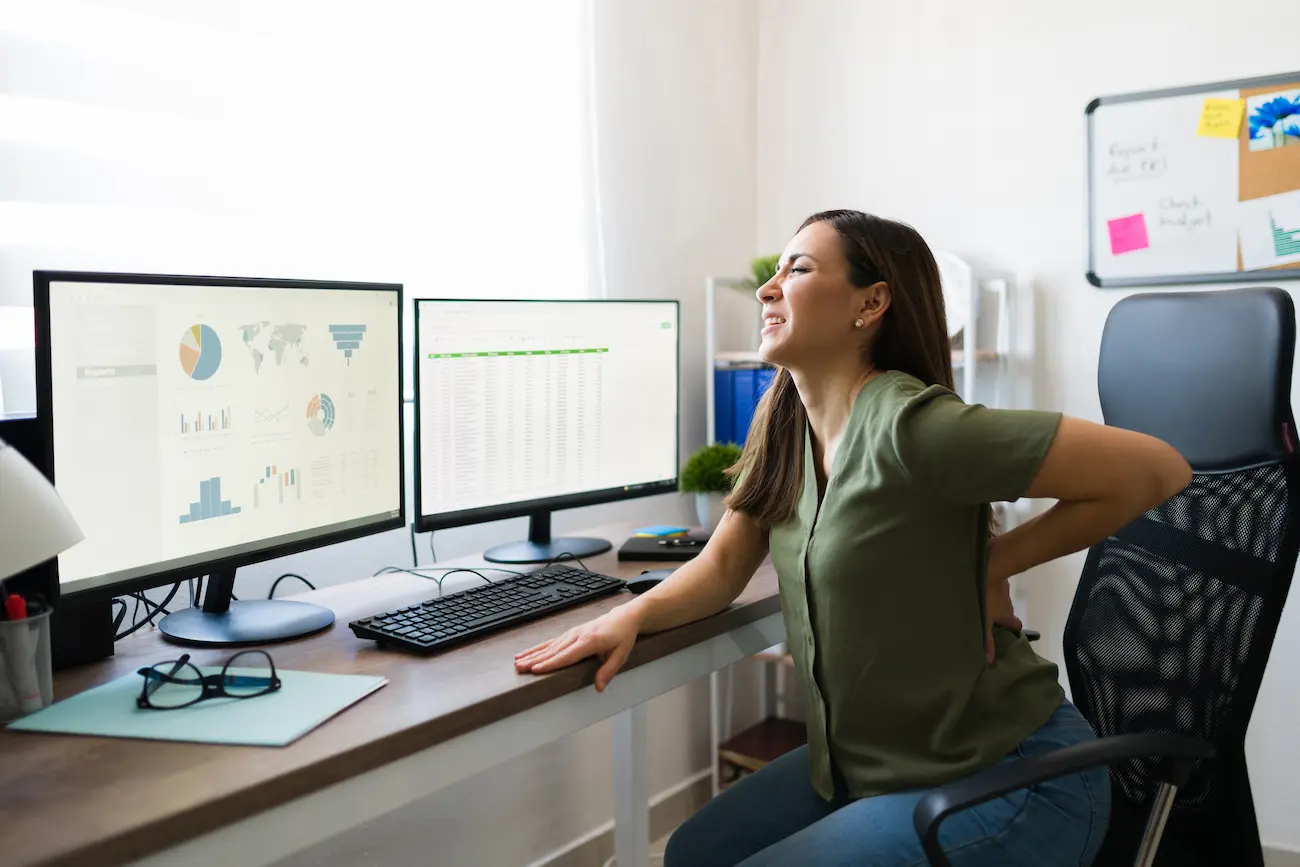
Yes. Sitting for prolonged periods can contribute to or worsen sciatica symptoms by increasing pressure on the lower spine, tightening muscles around the hips, and irritating an already compressed sciatic nerve. While sitting alone doesn't usually cause sciatica, it can make existing nerve irritation significantly worse, especially when combined with poor posture or an underlying spinal condition.
Key Takeaways
- Sitting alone doesn't usually cause sciatica.
- Long periods of sitting may aggravate an already irritated sciatic nerve.
- Poor posture and muscle tightness can increase stress on the lower back.
- Standing up, stretching, and moving regularly may help reduce symptoms.
- Persistent pain, numbness, or weakness should be evaluated by a healthcare professional.
Introduction
If you've ever stood up after a long day at your desk and felt a sharp pain shooting from your lower back into your leg, you may have wondered whether sitting too much is causing your sciatica.
The answer is not exactly.
For most people, sitting doesn't directly cause sciatica. However, it can place additional stress on the lower back, tighten the muscles surrounding the hips and pelvis, and increase pressure on an already irritated sciatic nerve. As a result, prolonged sitting often becomes one of the biggest triggers for sciatica flare-ups.
Whether you work at a desk, drive for a living, study for long hours, or frequently travel, understanding why sitting affects the sciatic nerve can help you reduce discomfort and protect your spine.
What Is Sciatica?
Sciatica is not a medical condition itself—it's a term used to describe symptoms caused by irritation or compression of the sciatic nerve, the largest nerve in the body.
The sciatic nerve begins in the lower back, travels through the buttocks, and extends down the back of each leg to the feet. When one or more of the nerve roots that form the sciatic nerve become compressed or inflamed, pain can travel anywhere along this pathway.
Unlike general lower back pain, sciatica often affects only one side of the body and may extend below the knee.
Common symptoms include:
- Sharp or shooting pain down one leg
- Burning or electric shock-like pain
- Tingling or "pins and needles"
- Numbness in the leg or foot
- Muscle weakness
- Pain that becomes worse after prolonged sitting
If you're unsure whether your symptoms are consistent with sciatica, our guide on Sciatica Pain Down the Leg: Causes, Symptoms, and Treatment explains how sciatic nerve pain differs from other types of leg pain and what symptoms to watch for.
Can Sitting Too Much Really Cause Sciatica?
One of the most common misconceptions is that sitting causes sciatica.
In reality, sitting is usually a contributing factor—not the underlying cause.
Most cases of sciatica occur because something is placing pressure on the nerve roots in the lower spine or irritating the sciatic nerve itself. Sitting doesn't usually create that problem, but it can increase pressure on sensitive tissues, making symptoms more noticeable.
Think of it like walking on a sprained ankle. Walking didn't cause the injury, but it can make it hurt more. The same principle applies to sciatica.
Several underlying conditions are commonly associated with sciatic nerve irritation.
Herniated Disc
One of the leading causes of sciatica is a herniated disc, sometimes called a slipped or ruptured disc.
Between each vertebra sits an intervertebral disc that acts as a cushion. If the soft inner portion pushes through the outer layer, it may press against a nearby nerve root.
When you're sitting—especially if you're slouching—the pressure inside the lumbar discs naturally increases. If a disc is already bulging, prolonged sitting may temporarily increase irritation around the affected nerve.
Spinal Stenosis
Spinal stenosis occurs when the spaces within the spine become narrower, reducing the room available for the nerves.
Although symptoms vary from person to person, prolonged sitting or remaining in one position for too long may contribute to increased discomfort in some individuals.
Degenerative Disc Disease
As we age, the discs in the spine gradually lose water content and flexibility.
This natural aging process is known as degenerative disc disease. While many people have degenerative changes without pain, others may develop inflammation or nerve compression that becomes more noticeable during prolonged sitting.
Piriformis Syndrome
Not all sciatica originates in the spine.
The piriformis muscle is a small muscle located deep within the buttock. In some people, the sciatic nerve passes directly underneath—or even through—this muscle.
If the piriformis becomes tight or inflamed, it can irritate the nearby sciatic nerve and produce symptoms similar to those caused by a herniated disc.
Because the piriformis muscle remains compressed while sitting, long periods in a chair, car, or airplane seat may trigger increased buttock pain and pain that radiates down the leg.
If you're wondering whether sciatica will improve on its own or requires professional care, our article Does Sciatica Go Away on Its Own? explains what to expect and when it's time to seek treatment.
Why Does Sitting Make Sciatica Worse?
If sitting doesn't usually cause sciatica, why do so many people notice their symptoms flare up after a long day at work or a long drive?
The answer lies in what happens to your spine, muscles, and nerves when you remain seated for extended periods.
Sitting changes the position of your pelvis, reduces movement in your spine, shortens certain muscles, and places greater pressure on the structures that surround the sciatic nerve. If that nerve is already irritated, these changes can make pain, numbness, or tingling much more noticeable.
While everyone experiences sciatica differently, several common factors explain why sitting often becomes one of the biggest symptom triggers.
Sitting Increases Pressure on the Lumbar Spine
Your lumbar spine, or lower back, supports much of your body's weight while sitting.
Although sitting may feel restful, it actually places more pressure on the spinal discs than standing. If you lean forward, slouch, or spend hours in the same position, the pressure on these discs increases even further.
For someone with a herniated or bulging disc, that extra pressure can irritate the nearby nerve root and trigger sciatic pain that travels through the buttock and down the leg.
This is one reason many people notice symptoms becoming worse during:
- Long workdays at a computer
- Extended car rides
- Air travel
- Watching television for several hours
- Long meetings
If you also experience aching or stiffness in your lower back after sitting, you may find our article Why Your Back Pain Gets Worse When Sitting: Causes and Fixes helpful. It explains how prolonged sitting affects the spine, even in people who don't have sciatica.
Poor Sitting Posture Can Increase Nerve Irritation
How you sit is often just as important as how long you sit.
Many people naturally slide forward in their chair, round their shoulders, or slump over a keyboard as the day goes on. Over time, this posture changes the alignment of the spine and pelvis.
Poor posture may:
- Flatten the natural curve of the lower back
- Increase pressure on the spinal discs
- Reduce support from the core muscles
- Increase muscle fatigue
- Place additional stress on the joints of the spine
These changes don't necessarily cause sciatica, but they can make an already irritated sciatic nerve more sensitive.
Tight Hip Flexors Can Pull on the Lower Back
When you sit for long periods, the muscles at the front of your hips—known as the hip flexors—remain shortened.
Over time, these muscles can become tight and less flexible.
Tight hip flexors may:
- Pull the pelvis into an exaggerated forward tilt
- Increase stress on the lower back
- Reduce hip mobility
- Change the way you walk and move
These biomechanical changes may place additional strain on structures surrounding the sciatic nerve, making symptoms more noticeable during everyday activities.
The Piriformis Muscle Can Become Tight
Another reason sitting may aggravate sciatica involves the piriformis muscle.
This small muscle sits deep within the buttock, directly beside the sciatic nerve. In some people, the nerve even passes through the muscle rather than underneath it.
Remaining seated for prolonged periods can cause the piriformis muscle to tighten.
When that happens, it may place additional pressure on the nearby sciatic nerve, leading to symptoms such as:
- Buttock pain
- Pain that radiates down the leg
- Tingling
- Numbness
- Discomfort when sitting on hard surfaces
This is one reason people with piriformis syndrome often report that driving or sitting for long periods is especially uncomfortable.
Less Movement Means More Stiffness
Your spine is designed to move.
Walking, standing, and changing positions throughout the day help keep the joints mobile, muscles flexible, and spinal discs nourished.
When you remain seated for hours, the opposite happens.
You may develop:
- Muscle stiffness
- Reduced joint mobility
- Tight connective tissues
- Decreased circulation
- Increased muscle fatigue
Even people without sciatica often feel stiff after sitting all day.
For someone whose sciatic nerve is already irritated, this stiffness can increase pain and make it harder to move comfortably when standing up.
Sitting Reduces Circulation
Although sitting doesn't completely stop blood flow, remaining inactive for long periods can reduce circulation to the muscles that support your lower back, hips, and legs.
Reduced circulation may contribute to:
- Muscle fatigue
- Increased tightness
- Slower recovery after physical activity
- A feeling of heaviness in the legs
This doesn't directly compress the sciatic nerve, but it can create an environment where muscles become tight and uncomfortable, indirectly contributing to symptom flare-ups.
Inflamed Nerves Become More Sensitive
One of the most important things to understand about sciatica is that an irritated nerve becomes more sensitive over time.
When the sciatic nerve is inflamed, it may react more strongly to pressure, prolonged positioning, or repetitive movements.
That's why activities that never bothered you before—such as sitting through a movie or driving across town—may suddenly become painful.
Because sciatica is a form of nerve pain, learning how irritated nerves behave can make your symptoms easier to understand. Our article Nerve Pain and Chronic Pain explains why nerve pain often feels different from muscle pain and why symptoms can sometimes persist even after the original injury begins to heal.
Weak Core Muscles May Contribute to Poor Sitting Mechanics
Your core muscles play an important role in supporting your spine throughout the day.
If these muscles become weak or fatigued, your body may rely more heavily on the joints, discs, and ligaments of the lower back for support.
Over time, poor core stability may:
- Encourage slouching
- Increase spinal loading
- Reduce postural endurance
- Place additional stress on irritated tissues
This doesn't mean weak core muscles cause sciatica, but improving core strength through a personalized rehabilitation program may help support healthier movement patterns and reduce strain on the lower back.
Key Point: Prolonged sitting doesn't usually cause sciatica, but it can worsen existing symptoms by increasing pressure on the lower spine, tightening surrounding muscles, reducing movement, and making an already irritated sciatic nerve more sensitive.
Understanding why sitting aggravates sciatica is the first step toward making practical changes that may help reduce discomfort.
Who Is Most at Risk of Sitting-Related Sciatica?
Anyone can experience sciatica, but some people are more likely to notice their symptoms worsen after sitting for long periods. Jobs, hobbies, and daily routines that involve extended periods of sitting can place repeated stress on the lower back and surrounding muscles, especially if movement breaks are infrequent.
While prolonged sitting doesn't necessarily cause sciatica, it can aggravate an existing spinal or nerve condition and contribute to recurring flare-ups.
Office Workers
Office workers often spend six to eight hours—or more—sitting at a desk each day. Over time, poor workstation ergonomics, prolonged computer use, and limited movement can increase stress on the lower back.
If your job requires long hours at a desk, taking regular movement breaks and maintaining proper posture may help reduce discomfort. If you also experience lower back pain after sitting, read Why Your Back Pain Gets Worse When Sitting: Causes and Fixes.
Remote Employees
Working from home often means spending hours at kitchen tables, couches, or other makeshift workstations that don't provide adequate back support.
Without an ergonomic chair or proper desk setup, it's easier to develop poor sitting habits that may increase strain on the spine and surrounding muscles.
Professional Drivers
Truck drivers, delivery drivers, rideshare drivers, and commuters often remain seated for several hours without the opportunity to stretch or change positions.
Constant vibration from the road, combined with prolonged sitting, may increase discomfort in people with existing sciatic nerve irritation.
Students
Students frequently spend long periods sitting during classes, studying, or completing assignments.
Without regular movement, muscles around the hips and lower back can become stiff, making existing sciatic nerve irritation more noticeable.
Gamers
Gaming sessions can easily last several hours without breaks.
Remaining in one position while leaning forward or slouching may increase pressure on the lower back and contribute to muscle tightness that aggravates sciatica symptoms.
Frequent Travelers
Whether traveling by car, train, or airplane, remaining seated for extended periods may trigger stiffness and increase pressure on the lower spine.
If you have sciatica, planning regular walking breaks during long trips may help reduce discomfort.
People With Existing Spine Conditions
Individuals diagnosed with conditions such as a herniated disc, spinal stenosis, degenerative disc disease, or piriformis syndrome are generally more likely to notice their symptoms worsen after prolonged sitting because the sciatic nerve is already irritated.
If you're unsure what's causing your symptoms, Sciatica Pain Down the Leg: Causes, Symptoms, and Treatment explains how sciatica develops and why pain often radiates into the leg.
Signs Your Sitting Habits May Be Making Sciatica Worse
Everyone experiences sciatica differently, but certain patterns may suggest that prolonged sitting is aggravating your symptoms.
You may notice:
- Pain that becomes worse after sitting for 20 to 60 minutes
- Sharp pain when standing up after sitting
- Pain that travels from the buttock into the thigh, calf, or foot
- Tingling or "pins and needles" in the leg
- Burning pain along the path of the sciatic nerve
- Numbness in the foot or toes
- Muscle stiffness after long meetings or car rides
- Temporary relief after standing up or walking
- Symptoms that worsen during workdays but improve on weekends or vacations
These signs don't necessarily mean sitting caused your sciatica, but they may indicate that prolonged sitting is contributing to nerve irritation.
Because sciatica is one type of nerve pain, understanding how nerves respond to inflammation can provide additional insight. Learn more in Nerve Pain and Chronic Pain.
How to Sit If You Have Sciatica
If sitting tends to trigger your symptoms, making small adjustments to your posture and workstation may help reduce pressure on your lower back and improve comfort throughout the day.
Although proper sitting posture won't cure sciatica, it may reduce unnecessary stress on the spine and surrounding muscles.
Maintain a Neutral Spine
Try to keep the natural curve in your lower back instead of slouching or rounding your shoulders forward.
Sitting upright helps distribute pressure more evenly across the spine and may reduce strain on irritated structures.
Use Lumbar Support
An ergonomic chair or a small lumbar support pillow can help maintain the natural curve of your lower back.
Good lumbar support may improve comfort during prolonged sitting, particularly if you work at a desk for most of the day.
Keep Both Feet Flat on the Floor
Place both feet flat on the floor with your knees bent at approximately 90 degrees.
If your feet don't comfortably reach the floor, consider using a footrest to improve your sitting position.
Keep Your Knees Slightly Lower Than Your Hips
Your hips should be level with—or slightly higher than—your knees.
This position helps reduce stress on the pelvis and lower back while encouraging a more neutral spinal posture.
Avoid Crossing Your Legs for Long Periods
Crossing your legs occasionally isn't usually harmful, but remaining in that position for extended periods may contribute to muscle imbalance and increased pressure around the pelvis.
Changing positions regularly is generally more beneficial than trying to maintain one "perfect" posture all day.
Avoid Sitting Too Long
Even excellent posture can't completely eliminate the effects of prolonged sitting.
Changing positions regularly is often more important than finding the perfect chair.
How Often Should You Stand Up?
One of the simplest ways to reduce sitting-related discomfort is to move more frequently throughout the day.
Many experts recommend standing, stretching, or walking every 30 to 60 minutes if your work requires prolonged sitting.
Simple ways to increase movement include:
- Walking around the office for a few minutes
- Standing during phone calls
- Using a sit-stand desk when available
- Stretching your hips and hamstrings
- Taking a short walk during lunch breaks
- Parking farther away from building entrances
- Setting reminders to stand throughout the day
Even a brief movement break can help reduce stiffness and temporarily relieve pressure on the lower spine.
If your symptoms continue despite improving your workstation and movement habits, it may be time to seek a professional evaluation. Our Sciatica Treatment page explains how we diagnose sciatic nerve pain and the conservative treatment options that may be appropriate based on the underlying cause.
Comparison Table
| Habit | Potential Effect on Sciatica |
|---|---|
| Sitting for several hours without breaks | May increase pressure on the lower spine and aggravate nerve irritation |
| Poor sitting posture | May increase stress on spinal discs, joints, and surrounding muscles |
| Walking regularly | May help reduce stiffness and encourage healthy spinal movement |
| Standing every 30–60 minutes | May reduce prolonged pressure on the sciatic nerve |
| Slouching while sitting | Can increase lumbar disc pressure and muscle fatigue |
| Using lumbar support | May improve sitting comfort and help maintain proper spinal alignment |
Myth vs. Fact
Myth: Sitting too much causes sciatica.
Fact: Sitting alone rarely causes sciatica. In most cases, it aggravates an existing problem such as a herniated disc, spinal stenosis, or piriformis syndrome.
Myth: If sitting hurts, you should avoid sitting completely.
Fact: Sitting is a normal part of everyday life. Rather than eliminating sitting altogether, focus on improving your posture, taking frequent movement breaks, and avoiding prolonged periods in one position.
Myth: Good posture alone will cure sciatica.
Fact: Good posture may reduce unnecessary stress on the spine, but it doesn't treat the underlying cause of sciatica. Persistent symptoms should be evaluated to determine what's irritating the sciatic nerve.
Myth: Rest is the best treatment for sciatica.
Fact: While short periods of rest may help during severe flare-ups, prolonged inactivity can contribute to stiffness and reduced mobility. Many people benefit from gentle movement and a treatment plan tailored to the underlying cause of their symptoms.
Can Sitting Too Much Cause Permanent Nerve Damage?
For most people, prolonged sitting does not cause permanent nerve damage. However, if an underlying condition continues to compress the sciatic nerve for an extended period, symptoms may gradually worsen and become more difficult to manage.
Sciatica itself is a symptom—not a diagnosis. Whether the nerve heals depends on what's causing the irritation. In many cases, conservative treatment and lifestyle changes can help reduce pressure on the nerve and improve function.
Ignoring persistent symptoms, however, may allow the underlying condition to progress. If you're wondering what can happen when sciatica isn't addressed, read What Happens If You Ignore Sciatica? (Add this internal link once the article is published.)
It's important to remember that not every episode of sciatica leads to long-term problems. Many people recover with appropriate care, activity modifications, and a treatment plan that addresses the source of the nerve irritation.
When Sitting Pain Could Be Something More Serious
While most cases of sciatica improve without emergency treatment, certain symptoms may indicate a more serious condition requiring immediate medical attention.
Seek urgent medical care if you experience:
- Progressive weakness in one or both legs
- Loss of bowel or bladder control
- Numbness around the groin, buttocks, or inner thighs (often called saddle numbness)
- Difficulty walking that suddenly worsens
- Severe pain following a fall, accident, or other traumatic injury
- Persistent fever accompanied by severe back pain
- Unexplained weight loss together with worsening back or leg pain
These symptoms are uncommon, but they should never be ignored because they may indicate significant nerve compression or another serious spinal condition.
When Should You Seek Professional Care?
It's normal for mild sciatica symptoms to improve over time, especially if they're related to temporary muscle irritation or inflammation. However, if your symptoms continue despite changing your sitting habits or begin interfering with your daily activities, it's time to seek a professional evaluation.
Consider scheduling an appointment if:
- Pain lasts longer than a few weeks
- Symptoms continue returning after temporary improvement
- Sitting, walking, or sleeping becomes increasingly difficult
- Pain begins limiting work, exercise, or everyday activities
- Numbness or tingling becomes more frequent
- Over-the-counter medications provide only temporary relief
A thorough evaluation can help determine why your sciatic nerve is irritated rather than simply treating the symptoms.
How Is Sciatica Evaluated?
Your healthcare provider will begin by discussing your symptoms, medical history, and daily activities.
The evaluation may include:
- A review of your symptoms
- Physical examination
- Posture assessment
- Range-of-motion testing
- Neurological examination
- Muscle strength testing
- Reflex testing
- Orthopedic tests to identify the source of nerve irritation
If necessary, imaging studies such as X-rays or MRI scans may be recommended to better understand the underlying cause of your symptoms.
Identifying the source of the nerve irritation is an important first step toward creating an effective treatment plan.
Is sitting making your sciatica worse?
Don't let persistent pain limit your daily life. A professional evaluation can identify the underlying cause and get you on the path to relief.
Schedule an Evaluation →Conservative Treatment Options for Sciatica
Treatment for sciatica depends on what's causing the nerve irritation. Rather than focusing only on relieving pain, conservative care aims to improve movement, reduce stress on the affected structures, and support the body's natural healing process.
Depending on your condition, your provider may recommend one or more of the following approaches.
Chiropractic Care
For some patients, chiropractic care may help improve spinal mobility and reduce mechanical stress on the joints of the lower back.
Treatment recommendations are based on your diagnosis, symptoms, and overall health.
Spinal Decompression Therapy
For certain disc-related conditions, spinal decompression therapy may help reduce pressure on affected spinal discs and nerve roots.
Not everyone is a candidate for spinal decompression, so an evaluation is necessary to determine whether it's appropriate for your condition.
Shockwave Therapy
When clinically appropriate, Shockwave Therapy may be incorporated into a treatment plan to address certain soft tissue conditions that contribute to pain or reduced mobility.
Its use depends on the underlying diagnosis and is not appropriate for every cause of sciatica.
Personalized Rehabilitation
Strengthening the muscles that support the spine and improving flexibility can play an important role in long-term recovery.
A personalized rehabilitation program may include exercises designed to:
- Improve core stability
- Increase hip mobility
- Reduce muscle tightness
- Improve posture
- Restore functional movement
- Reduce stress on the lower back during daily activities
Unlike generic exercise programs found online, rehabilitation should be tailored to your individual diagnosis and physical abilities.
If your symptoms are affecting your quality of life, learn more about our Sciatica Treatment services to see how we evaluate and manage sciatic nerve pain using a personalized, conservative approach.
Can Sciatica Be Prevented?
Not every case of sciatica can be prevented, but healthy daily habits may reduce stress on your lower back and lower your risk of symptom flare-ups.
Simple strategies include:
- Avoid sitting continuously for long periods.
- Stand up and move every 30 to 60 minutes.
- Maintain good posture throughout the day.
- Strengthen your core muscles.
- Stay physically active.
- Lift heavy objects using proper technique.
- Maintain a healthy body weight.
- Stretch regularly, especially if you have a desk job.
These habits won't eliminate every cause of sciatica, but they may help support spinal health and reduce unnecessary strain on the sciatic nerve.
If you frequently experience nerve-related discomfort beyond sciatica, our article Don't Do These Things If You're Suffering from a Pinched Nerve discusses common habits that may prolong nerve irritation and what you can do instead.
Conclusion
Sitting too much doesn't usually cause sciatica, but it can make existing symptoms significantly worse.
When you remain seated for long periods, pressure on the lower spine increases, muscles around the hips become tighter, and movement decreases. Together, these changes can place additional stress on an already irritated sciatic nerve and contribute to pain, tingling, numbness, or stiffness.
Fortunately, simple changes—such as improving your sitting posture, taking regular movement breaks, and maintaining an active lifestyle—may help reduce discomfort for many people.
However, persistent or worsening symptoms shouldn't be ignored. If your pain continues despite making lifestyle changes, a professional evaluation can help identify the underlying cause and determine the most appropriate treatment plan.
The next step isn't simply treating the pain—it's understanding why the sciatic nerve is irritated in the first place.
Frequently Asked Questions
External References
The following organizations provide evidence-based information about sciatica, lower back pain, and nerve health:
American Academy of Orthopaedic Surgeons (AAOS)
American Association of Neurological Surgeons (AANS)
National Institute of Neurological Disorders and Stroke (NINDS)
Mayo Clinic
This content has been reviewed by our healthcare professionals for accuracy and educational purposes. It should not be used as a substitute for professional medical advice, diagnosis, or treatment.